More About This Card
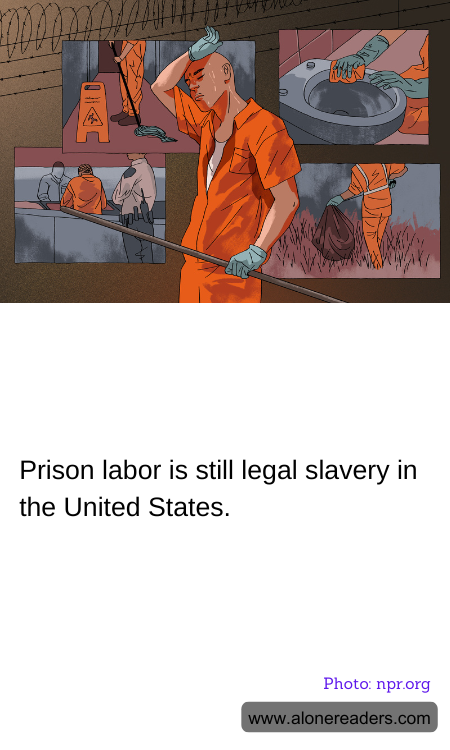
In the United States, the conversation around prison labor often evokes strong emotions and raises critical questions about ethics, human rights, and economic practices. At the heart of this debate is the assertion that prison labor is a modern form of slavery, a claim that finds its roots in the very fabric of American history and law.
The 13th Amendment to the U.S. Constitution, ratified in 1865, famously abolished slavery and involuntary servitude, except as a punishment for crime whereof the party shall have been duly convicted. This exception clause has been the foundation for the use of prison labor, allowing incarcerated individuals to be compelled to work, often for little or no pay. This legal loophole has led to a system where prisoners are employed in various industries, from manufacturing to agriculture, sometimes under conditions that starkly contrast with labor standards outside prison walls.
Critics argue that this system exploits a vulnerable population, disproportionately affecting marginalized communities, particularly African Americans and other minorities. The racial disparities in the U.S. criminal justice system mean that these groups are overrepresented in prisons, and thus, in the prison labor force. This dynamic perpetuates a cycle of inequality, where those who are already disadvantaged are further marginalized through forced labor.
Moreover, the economic implications of prison labor are significant. Incarcerated workers are often paid pennies per hour, if at all, while their labor generates substantial profits for private companies and state-run enterprises. This not only raises ethical concerns but also impacts the broader labor market. By providing a source of cheap labor, prison work can undercut wages and working conditions for free workers, creating a competitive disadvantage and potentially driving down standards across industries.
Proponents of prison labor argue that it provides valuable skills and work experience for inmates, aiding in rehabilitation and reducing recidivism. However, the reality is often more complex. Many prison jobs are menial and do not offer transferable skills that can be used upon release. Furthermore, the lack of adequate compensation means that prisoners are unable to save money for their eventual reentry into society, hindering their ability to reintegrate successfully.
The ongoing debate over prison labor in the United States highlights the need for a critical examination of the intersection between justice, economics, and human rights. As society continues to grapple with these issues, it is essential to consider reforms that ensure fair treatment and opportunities for all individuals, regardless of their incarceration status. Addressing the ethical concerns surrounding prison labor is not only a matter of justice but also a step towards a more equitable and humane society.