More About This Card
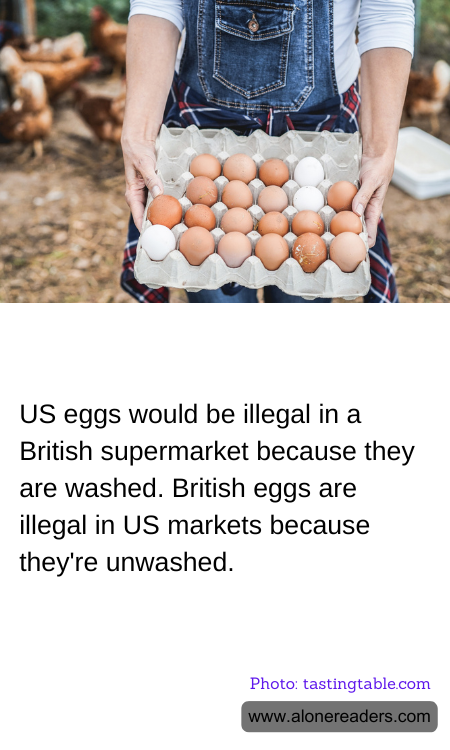
In the world of international trade, the humble egg serves as a fascinating example of how cultural practices and regulatory standards can vary significantly between countries. A peculiar case in point is the difference in how eggs are treated and marketed in the United States and the United Kingdom, leading to a situation where eggs from each country would be deemed illegal in the other's supermarkets.
In the United States, eggs undergo a rigorous cleaning process before they reach the consumer. This involves washing the eggs with soap and hot water, followed by a sanitizing rinse. The rationale behind this practice is to remove any potential contaminants, such as salmonella, from the eggshells. The U.S. Department of Agriculture (USDA) mandates this washing process to ensure food safety, and it is a standard that American consumers have come to expect. However, this washing process also removes the egg's natural protective coating, known as the cuticle, which helps to prevent bacteria from entering the egg. As a result, U.S. eggs must be refrigerated to maintain their freshness and safety.
Conversely, in the United Kingdom, eggs are not washed before they are sold. British regulations emphasize maintaining the egg's natural defenses, including the cuticle, which remains intact when the egg is left unwashed. The British approach is based on the belief that preserving this natural barrier is more effective in preventing contamination. Instead of washing, the focus is on maintaining high standards of cleanliness and hygiene in the henhouses. As a result, British eggs are typically not refrigerated in stores, as the intact cuticle provides sufficient protection against spoilage and bacterial invasion.
These differing practices mean that U.S. eggs would not meet the standards required for sale in British supermarkets, as the washing process is seen as compromising the egg's natural defenses. Similarly, British eggs would not be allowed in U.S. markets, as they do not undergo the mandatory washing and sanitizing process required by the USDA.
This divergence in egg treatment highlights broader differences in food safety philosophies. The U.S. approach prioritizes immediate cleanliness and sanitation, while the U.K. emphasizes natural protection and farm-level hygiene. Both systems have their merits and are designed to ensure consumer safety, yet they reflect distinct cultural attitudes towards food handling and safety.
For consumers, this means that when traveling or moving between these countries, they may encounter eggs that are stored and handled differently than what they are accustomed to. It serves as a reminder of the complex interplay between science, regulation, and tradition in the global food market. Understanding these differences can foster greater appreciation for the diverse ways in which countries strive to protect public health while respecting local customs and consumer expectations.