More About This Card
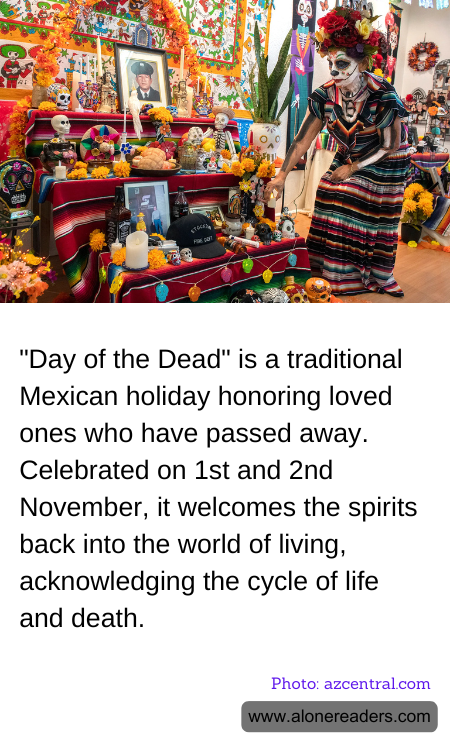
The "Day of the Dead," or "Día de los Muertos," is a vibrant and deeply meaningful Mexican holiday that honors the memory of loved ones who have passed away. Celebrated on the 1st and 2nd of November, this tradition is a time when families come together to remember and celebrate the lives of those who have departed, welcoming their spirits back into the world of the living. This holiday is a beautiful acknowledgment of the cycle of life and death, offering a unique perspective on mortality that is both comforting and celebratory.
The origins of the Day of the Dead can be traced back to ancient indigenous cultures, including the Aztecs, who believed in the cyclical nature of life and death. Over time, these beliefs merged with Catholic traditions introduced by Spanish colonizers, resulting in a rich tapestry of customs that are observed today. The holiday is marked by a blend of solemnity and festivity, with families creating altars, or "ofrendas," in their homes and at gravesites. These altars are adorned with photographs, candles, marigolds, and favorite foods and beverages of the deceased, serving as a welcoming gesture for the returning spirits.
Central to the celebration is the belief that death is not an end but a continuation of the journey. This perspective is reflected in the lively and colorful nature of the festivities. Streets and cemeteries are filled with music, dance, and laughter, as people come together to share stories and memories of their loved ones. The use of vibrant colors, particularly the bright orange of marigolds, symbolizes the vitality and joy of life, while the presence of skulls and skeletons, often depicted in playful and whimsical ways, serves as a reminder of the inevitability of death.
The Day of the Dead is also an opportunity for cultural expression and community bonding. In many towns and cities across Mexico, parades and public celebrations are held, featuring traditional music, dance, and art. These events not only honor the deceased but also celebrate the rich cultural heritage of Mexico. The holiday has gained international recognition, with people around the world embracing its themes of remembrance and celebration.
For those unfamiliar with the Day of the Dead, it may seem unusual to celebrate death with such exuberance. However, this holiday offers a profound lesson in embracing the full spectrum of human experience. By honoring those who have passed, the Day of the Dead encourages us to cherish the present and to live with an awareness of the interconnectedness of life and death. It is a time to reflect on the legacy of those who came before us and to find comfort in the belief that they continue to be a part of our lives, even in their absence.