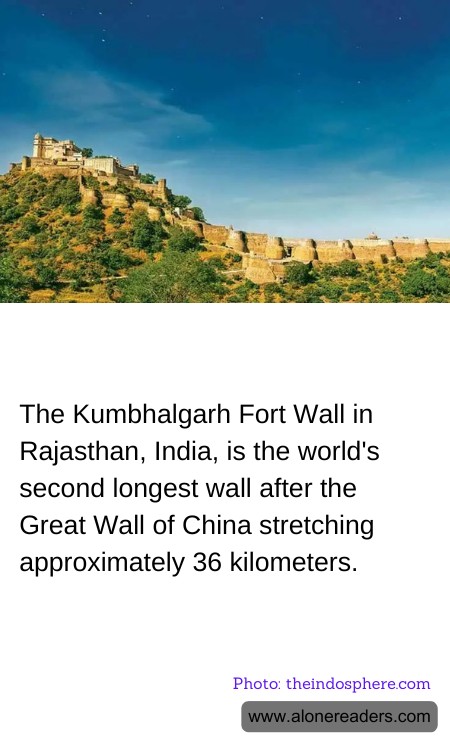
Nestled in the rugged terrain of the Aravalli Range in Rajasthan, India, the Kumbhalgarh Fort stands as a testament to the architectural prowess and historical significance of the region. While the fort itself is a marvel, it is the wall surrounding it that captures the imagination of visitors from around the world. Stretching approximately 36 kilometers, the Kumbhalgarh Fort Wall is the second longest continuous wall in the world, surpassed only by the Great Wall of China.
Constructed in the 15th century by Rana Kumbha, the fort and its wall were designed to protect the kingdom from invasions. The wall's impressive length and strategic design made it a formidable barrier against enemies. Built with local stone and lime mortar, the wall is an engineering marvel of its time, showcasing the ingenuity and resourcefulness of the builders. Its width varies from 15 to 25 feet, allowing eight horses to ride abreast, a testament to its robust construction.
The Kumbhalgarh Fort Wall is not just a defensive structure; it is also a symbol of the rich cultural heritage of Rajasthan. The wall encompasses a series of temples, palaces, and other structures within its expanse, reflecting the artistic and spiritual inclinations of the era. The fort complex houses over 360 temples, with the most notable being the Shiva Temple, which features a massive Shivalinga. These structures offer a glimpse into the religious and cultural life of the people who once inhabited the fort.
Visitors to Kumbhalgarh are often struck by the breathtaking views from the fort's ramparts. The wall winds through the undulating landscape, offering panoramic vistas of the surrounding hills and forests. This scenic beauty, combined with the fort's historical significance, makes Kumbhalgarh a popular destination for tourists and history enthusiasts alike. The fort has been recognized as a UNESCO World Heritage Site, further cementing its status as a cultural treasure.
The Kumbhalgarh Fort Wall is more than just a relic of the past; it is a living testament to the resilience and creativity of the people who built it. It stands as a reminder of the rich history and cultural diversity of India, inviting visitors to explore and appreciate the stories etched into its stones. As travelers walk along the ancient pathways, they are transported back in time, experiencing the grandeur and mystery of a bygone era.
In conclusion, the Kumbhalgarh Fort Wall is a remarkable achievement in architectural history, offering a unique glimpse into the past. Its impressive length and historical significance make it a must-visit destination for anyone interested in exploring the rich tapestry of India's heritage. Whether viewed from afar or explored up close, the wall continues to inspire awe and admiration, standing as a proud symbol of Rajasthan's enduring legacy.
