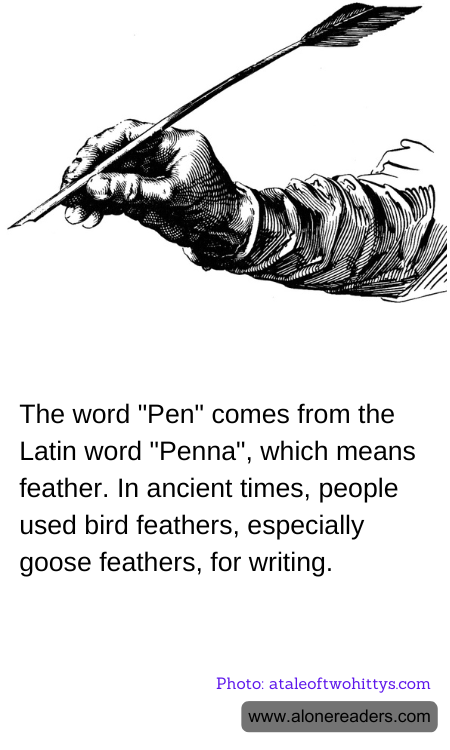
The evolution of writing instruments is a fascinating journey that traces back to the very roots of human communication. The word "pen" is derived from the Latin word "penna," which translates to "feather." This etymology provides a glimpse into the past, where the humble feather played a pivotal role in the development of writing.
In ancient times, before the advent of modern pens, people relied on bird feathers, particularly those of geese, to record their thoughts and ideas. These feathers, known as quills, were the primary writing tools for centuries. The process of transforming a simple feather into a writing instrument was both an art and a craft. The feather's shaft was carefully cleaned and shaped, and the tip was cut into a nib that could hold ink. This nib was then dipped into an inkwell, allowing the writer to transfer ink onto parchment or paper.
The choice of goose feathers was not arbitrary. Goose feathers were favored for their size, strength, and flexibility, making them ideal for the rigors of writing. The quill's ability to produce fine lines and its adaptability to different writing styles made it a versatile tool for scribes, scholars, and artists alike. The use of quills was widespread across Europe and the Middle East, where they became synonymous with the written word.
The quill's significance extended beyond its practical use. It became a symbol of knowledge, education, and communication. In medieval Europe, the quill was an essential tool in monasteries and universities, where monks and scholars meticulously copied texts by hand. These handwritten manuscripts were the primary means of preserving and disseminating knowledge before the invention of the printing press.
Despite the eventual development of more advanced writing instruments, the legacy of the quill endures. Its influence can be seen in the design of modern pens, which mimic the quill's shape and function. The quill also holds a special place in cultural and historical contexts, often depicted in art and literature as a symbol of creativity and intellectual pursuit.
Today, while we may take for granted the convenience of ballpoint pens and digital devices, the story of the quill reminds us of the ingenuity and resourcefulness of our ancestors. The transformation of a simple feather into a tool of communication is a testament to human innovation and the enduring power of the written word. As we continue to evolve in our methods of communication, the quill remains a cherished relic of our past, a reminder of the journey from feather to pen.
