More About This Card
In the late 1990s, the landscape of superhero cinema was vastly different from what it is today. Marvel Comics, now a powerhouse in the film industry, was struggling financially and seeking ways to capitalize on its vast array of characters. In a move that would later be seen as a monumental turning point in the history of comic book adaptations, Marvel approached Sony Pictures with an offer that could have reshaped the cinematic universe as we know it.
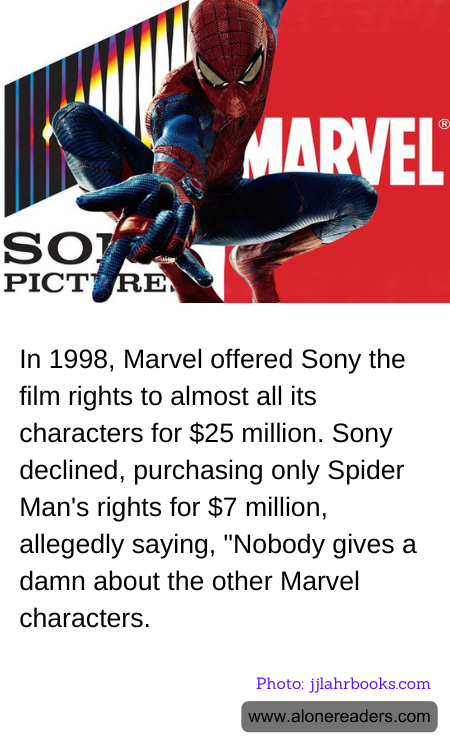
In 1998, Marvel proposed a deal to Sony, offering the film rights to nearly all of its characters for a mere $25 million. At the time, this included iconic figures such as Iron Man, Thor, and the X-Men, characters who would later become household names and the backbone of the Marvel Cinematic Universe (MCU). However, Sony, perhaps unable to foresee the potential of these characters, declined the offer. Instead, they chose to purchase the rights to Spider-Man for $7 million, reportedly dismissing the rest of Marvel's roster with the comment, "Nobody gives a damn about the other Marvel characters."
This decision, while seemingly prudent at the time, would become one of the most talked-about missed opportunities in Hollywood history. Sony's acquisition of Spider-Man did lead to a successful film franchise, beginning with Sam Raimi's "Spider-Man" in 2002, which was both a critical and commercial success. However, the decision to pass on the rest of Marvel's characters left the door open for Marvel Studios to eventually reclaim and develop its own cinematic universe.
In 2008, Marvel Studios launched the MCU with "Iron Man," a film that not only revitalized the superhero genre but also set the stage for an interconnected universe that would captivate audiences worldwide. Over the years, characters that Sony had dismissed as unimportant became central figures in a series of blockbuster films, culminating in the unprecedented success of "Avengers: Endgame" in 2019, which became one of the highest-grossing films of all time.
Sony's decision in 1998 serves as a fascinating case study in the unpredictability of the entertainment industry. It highlights how perceptions of value can shift dramatically over time and underscores the importance of vision and foresight in business decisions. While Sony has enjoyed success with Spider-Man, Marvel's ability to build a cohesive and expansive universe with its remaining characters has redefined the possibilities of franchise filmmaking.
Today, the MCU is a cultural phenomenon, beloved by fans of all ages and a testament to the enduring appeal of Marvel's characters. The story of Sony's decision is a reminder of how close the world came to a very different cinematic landscape and how sometimes, the greatest opportunities are those that are initially overlooked.