More About This Card
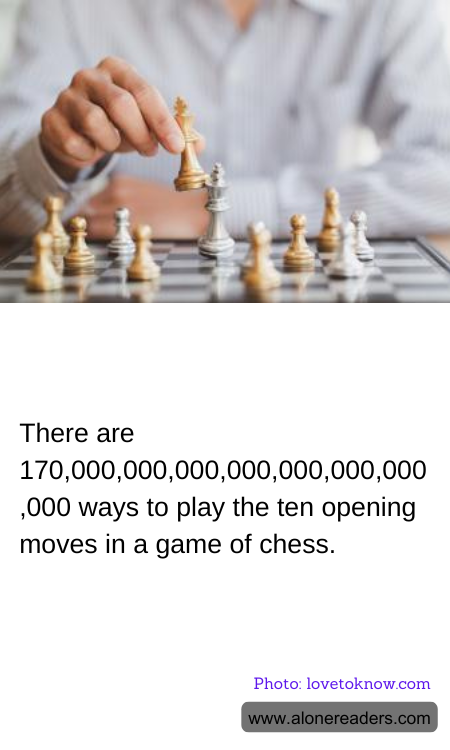
Chess, a game of strategy and intellect, has fascinated minds for centuries. Its seemingly simple 64-square board and 32 pieces belie the complexity and depth that lie within. One of the most intriguing aspects of chess is the sheer number of possibilities it offers, especially in the opening moves. In fact, there are approximately 170,000,000,000,000,000,000,000,000 ways to play the first ten moves in a game of chess. This staggering number highlights the vastness of the game and the endless opportunities for creativity and strategy.
The opening moves in chess are crucial, setting the stage for the entire game. They involve a delicate balance of developing pieces, controlling the center of the board, and ensuring the safety of the king. Each move opens up a myriad of possibilities, and with each subsequent move, the number of potential positions multiplies exponentially. This complexity is what makes chess both challenging and captivating.
The vast number of possible opening sequences is a testament to the game's depth. It allows players to explore countless strategies and tactics, ensuring that no two games are ever truly alike. This diversity is one of the reasons why chess has remained a popular and enduring pastime across cultures and generations. It challenges players to think critically, anticipate their opponent's moves, and adapt their strategies in real-time.
For beginners, the sheer number of possibilities can be overwhelming. However, this is also what makes learning chess so rewarding. As players become more familiar with the game, they begin to recognize patterns and develop their own unique style of play. The opening moves become a canvas for creativity, where players can experiment with different strategies and discover what works best for them.
For seasoned players, the vast number of opening possibilities offers endless opportunities for innovation. Even after years of playing, there is always something new to learn and explore. This continuous learning process is what keeps the game fresh and exciting, even for those who have been playing for decades.
In the digital age, the complexity of chess has been further explored through computer algorithms and artificial intelligence. These technologies have analyzed millions of games, uncovering new strategies and insights that were previously unimaginable. Yet, despite the advancements in technology, the human element of chess remains irreplaceable. The ability to think creatively, adapt to new situations, and outwit an opponent is something that no computer can fully replicate.
In conclusion, the 170,000,000,000,000,000,000,000,000 ways to play the first ten moves in chess underscore the game's infinite possibilities and enduring appeal. Whether you are a novice or a grandmaster, chess offers a unique blend of challenge, creativity, and intellectual stimulation. It is a game that continues to evolve, inspiring players of all ages to explore its depths and discover the endless possibilities that lie within.