More About This Card
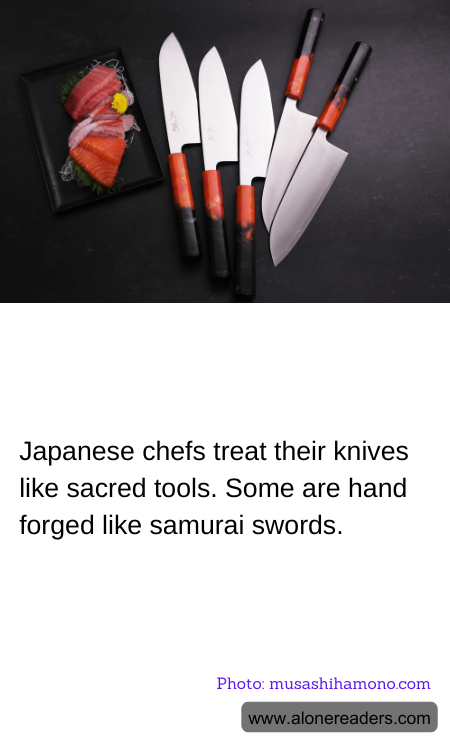
In the world of culinary arts, few tools are as revered as the Japanese chef's knife. These knives are not merely instruments for cutting and slicing; they are considered sacred tools, embodying the spirit of craftsmanship and tradition. Japanese chefs treat their knives with the utmost respect, understanding that these blades are extensions of their own skills and artistry in the kitchen.
The reverence for Japanese knives is deeply rooted in the country's history and culture. Many of these knives are hand-forged using techniques that date back centuries, reminiscent of the way samurai swords were crafted. The process of creating a Japanese knife is an art form in itself, requiring a high level of skill and precision. Master blacksmiths, often with decades of experience, meticulously forge each blade, ensuring that it meets the highest standards of quality and performance. This dedication to craftsmanship is what sets Japanese knives apart and makes them highly sought after by chefs around the world.
The forging process involves multiple steps, each crucial to the final product. It begins with selecting the right type of steel, which is then heated, hammered, and folded repeatedly to create a blade that is both strong and flexible. This technique, known as "honyaki," is similar to the traditional methods used in making samurai swords, where layers of steel are combined to produce a blade with a sharp edge and a resilient core. The result is a knife that can slice through ingredients with ease and precision, enhancing the culinary experience.
Japanese chefs understand that their knives are not just tools but partners in their craft. They take great care in maintaining their blades, regularly honing and sharpening them to ensure optimal performance. This maintenance is not merely a chore but a ritual that reflects the deep respect they have for their knives. Proper care extends the life of the blade and preserves its sharpness, allowing chefs to perform their tasks with the utmost efficiency and grace.
The relationship between a Japanese chef and their knife is one of mutual respect and trust. Chefs often form a personal bond with their knives, appreciating the unique characteristics of each blade. This connection is akin to the bond between a samurai and their sword, where the weapon is seen as an extension of the warrior's soul. In the kitchen, a well-crafted knife allows chefs to express their creativity and passion for cooking, transforming raw ingredients into culinary masterpieces.
In conclusion, Japanese chefs' treatment of their knives as sacred tools is a testament to the rich cultural heritage and craftsmanship that defines these exceptional blades. Hand-forged with the same dedication and precision as samurai swords, Japanese knives are more than just kitchen tools; they are symbols of artistry and tradition. For chefs, these knives are indispensable partners in their culinary journey, enabling them to create dishes that delight the senses and honor the legacy of Japanese craftsmanship.