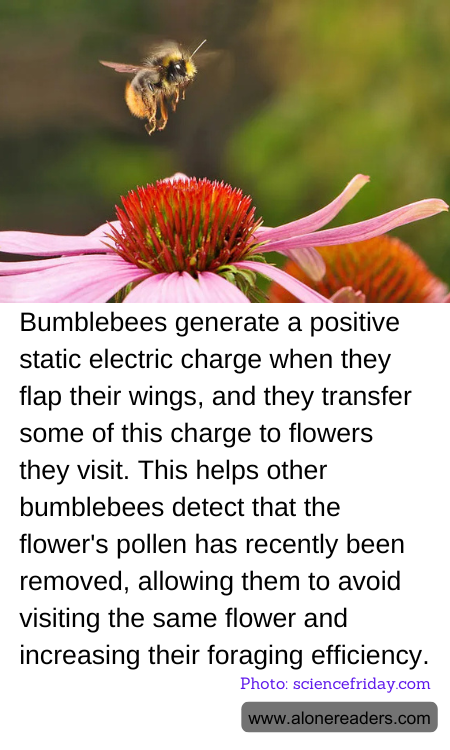
In the intricate dance of nature, bumblebees play a fascinating role that goes beyond their well-known task of pollination. These industrious insects are not only vital for the reproduction of many flowering plants but also exhibit a remarkable ability to communicate through the subtle language of electricity. When bumblebees flap their wings, they generate a positive static electric charge. This charge is more than just a byproduct of their flight; it serves a crucial function in their foraging activities.
As bumblebees move from flower to flower, they transfer some of this static charge to the blossoms they visit. This transfer of charge is not merely incidental; it creates an electrical field around the flower. When another bumblebee approaches, it can detect this field, which acts as a signal that the flower has recently been visited and its pollen likely harvested. This ingenious system allows bumblebees to optimize their foraging efficiency by avoiding flowers that have already been depleted of their pollen.
This electrical communication is a testament to the complex interactions within ecosystems, where even the smallest creatures have evolved sophisticated methods to enhance their survival. By avoiding flowers that have already been visited, bumblebees can conserve energy and time, focusing their efforts on flowers that are more likely to yield a rewarding supply of nectar and pollen. This behavior not only benefits the bees but also ensures a more effective pollination process, as it encourages them to visit a wider variety of flowers.
The discovery of this electrical interaction between bumblebees and flowers highlights the intricate and often hidden mechanisms that govern natural ecosystems. It underscores the importance of preserving these delicate relationships, as disruptions could have far-reaching consequences for both pollinators and the plants they help reproduce. Understanding such interactions can also inspire new technologies and innovations, drawing from nature's own solutions to complex problems.
In a world where the balance of ecosystems is increasingly threatened by human activities, the story of the bumblebee and its electrical communication with flowers serves as a reminder of the wonders of nature. It invites us to appreciate the small yet significant roles that each species plays in maintaining the harmony of our environment. As we continue to explore and learn from these natural phenomena, we gain not only knowledge but also a deeper respect for the interconnectedness of life on Earth.
