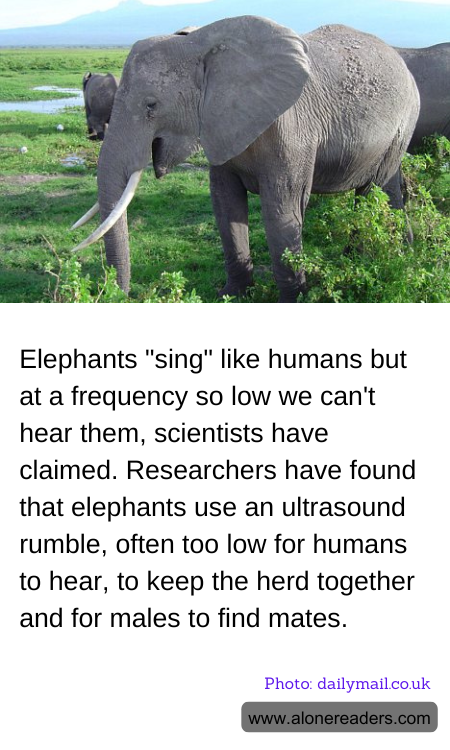
More About This Card
In the vast landscapes where elephants roam, a remarkable form of communication unfolds, largely unnoticed by human ears. Scientists have discovered that elephants "sing" in a manner akin to humans, but their songs resonate at frequencies so low that they escape our auditory perception. This fascinating phenomenon, known as infrasound, allows elephants to communicate over long distances, playing a crucial role in their social structure and survival.
Elephants produce these low-frequency rumbles, which can travel several kilometers, to maintain cohesion within their herds and to facilitate mating. The ability to communicate over such distances is particularly advantageous in the expansive habitats elephants occupy, where visual contact is often limited by dense vegetation or vast open spaces. These infrasound calls are essential for coordinating movements, alerting the herd to potential dangers, and ensuring that family groups remain connected.
The intricacies of elephant communication are not just limited to keeping the herd together. Male elephants, or bulls, utilize these deep rumbles during musth, a period of heightened sexual activity and aggression, to announce their presence and readiness to mate. These vocalizations serve as a signal to potential mates and a warning to rival males, helping to establish dominance and reproductive opportunities. The ability to communicate reproductive status over long distances is a vital adaptation, ensuring that elephants can find mates even when they are spread across large territories.
Research into elephant infrasound has revealed that these majestic creatures possess a level of vocal sophistication that rivals that of humans. Elephants have a complex social structure, and their communication system reflects this complexity. Scientists have observed that elephants can modulate the pitch and duration of their calls, suggesting a level of intentionality and nuance in their vocalizations. This ability to convey different messages through sound is a testament to the intelligence and social nature of elephants.
The study of elephant communication not only enhances our understanding of these magnificent animals but also underscores the importance of conserving their habitats. As human activities continue to encroach on elephant territories, the disruption of their communication networks poses a significant threat to their survival. Protecting the environments where elephants live is crucial to preserving the natural symphony of infrasound that is vital to their way of life.
In conclusion, the discovery of elephants' low-frequency "singing" adds a new dimension to our appreciation of these gentle giants. It highlights the complexity of their social interactions and the sophisticated ways in which they navigate their world. As we continue to learn more about elephant communication, it becomes increasingly clear that these animals have much to teach us about the power of sound and the importance of connection in the natural world.