More About This Card
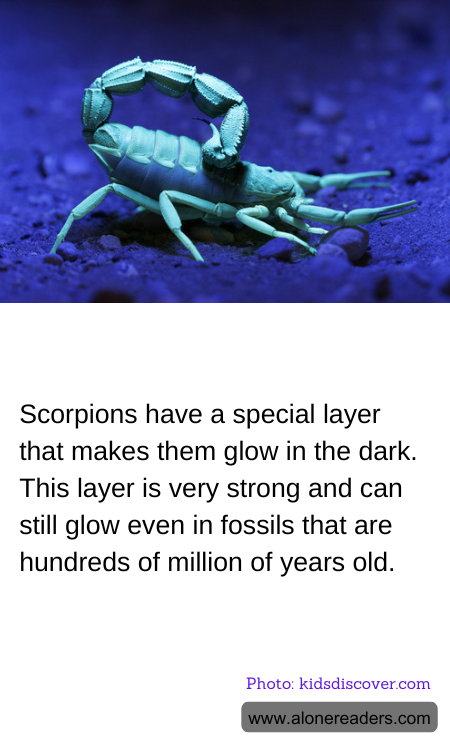
Scorpions are fascinating creatures that have intrigued scientists and nature enthusiasts alike for centuries. One of their most captivating features is their ability to glow under ultraviolet light, a phenomenon that has puzzled researchers and sparked curiosity among the general public. This glow is not just a modern marvel; it is a testament to the resilience and longevity of scorpions, as even their ancient fossils exhibit this luminescent trait.
The secret behind this glowing ability lies in a special layer found in the scorpion's exoskeleton. This layer contains compounds that react to ultraviolet light, causing the scorpion to emit a blue-green glow. While the exact purpose of this glow remains a topic of debate, several theories suggest it may serve as a form of communication, a way to deter predators, or even a method to help scorpions detect UV light, which they cannot see directly.
What makes this glowing layer particularly remarkable is its durability. Scorpions have been around for hundreds of millions of years, and their glowing trait has been preserved in fossils dating back to ancient times. This suggests that the compounds responsible for the glow are incredibly stable, surviving the test of time and the harsh conditions that typically degrade organic materials. The persistence of this glow in fossils provides scientists with a unique opportunity to study the evolutionary history of scorpions and gain insights into the environmental conditions of prehistoric eras.
The glow of scorpions is not only a subject of scientific inquiry but also a source of wonder for people of all ages. It adds an element of mystery to these already enigmatic creatures, making them a popular subject in educational programs and nature documentaries. For children and adults alike, the idea that a creature can glow in the dark like a living nightlight is both magical and intriguing.
In addition to its scientific and educational value, the glowing ability of scorpions has practical applications. Researchers are exploring ways to harness this natural luminescence for various purposes, such as developing new materials that can glow in the dark or creating more efficient ways to detect scorpions in the wild, which can be crucial for avoiding potentially dangerous encounters.
In conclusion, the glowing layer of scorpions is a testament to the wonders of nature and the resilience of life on Earth. It serves as a bridge between the ancient past and the present, offering insights into the evolutionary journey of these remarkable creatures. Whether viewed through the lens of science or simply appreciated for its beauty, the glow of scorpions continues to captivate and inspire, reminding us of the endless mysteries waiting to be uncovered in the natural world.