More About This Card
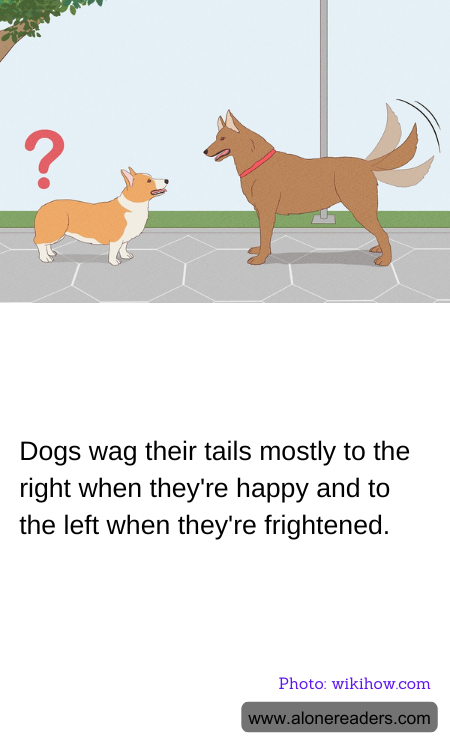
Dogs have long been cherished as loyal companions, and their ability to communicate through body language is one of the many reasons they are so beloved. Among the most recognizable forms of canine communication is tail wagging, a behavior that can convey a wide range of emotions. Interestingly, scientific studies have revealed that the direction in which a dog wags its tail can provide insights into its emotional state. Specifically, dogs tend to wag their tails more to the right when they are happy and to the left when they are frightened or anxious.
The concept of lateralization, which refers to the preference for one side of the body over the other, is not unique to humans. Just as people might be right-handed or left-handed, dogs also exhibit lateralized behavior. Research conducted by neuroscientists has shown that the direction of a dog's tail wagging is linked to the different hemispheres of their brain. The right side of the brain, which controls the left side of the body, is associated with negative emotions, while the left side of the brain, controlling the right side of the body, is linked to positive emotions.
When a dog encounters a friendly human or another dog, the left hemisphere of its brain is more active, resulting in a tail wag that favors the right side. This rightward wagging is a sign of contentment and excitement, indicating that the dog is experiencing positive emotions. On the other hand, when a dog feels threatened or uneasy, the right hemisphere becomes more active, leading to a leftward wag. This subtle shift in tail direction can serve as a warning sign to other dogs or humans that the animal is feeling anxious or fearful.
Understanding these nuances in tail wagging can enhance the bond between humans and dogs. By paying attention to the direction of a dog's tail wag, owners can gain a deeper understanding of their pet's emotional state and respond appropriately. For instance, if a dog is wagging its tail predominantly to the left, it might be beneficial to approach the animal with caution and provide reassurance. Conversely, a rightward wag can be an invitation to engage in play or offer affection.
This fascinating aspect of canine behavior underscores the complexity of dogs' emotional lives and their ability to communicate with humans and other animals. It also highlights the importance of observing and interpreting body language as a means of fostering a harmonious relationship with our four-legged friends. As we continue to learn more about the intricacies of canine communication, we can better appreciate the depth of the bond we share with these remarkable animals.