More About This Card
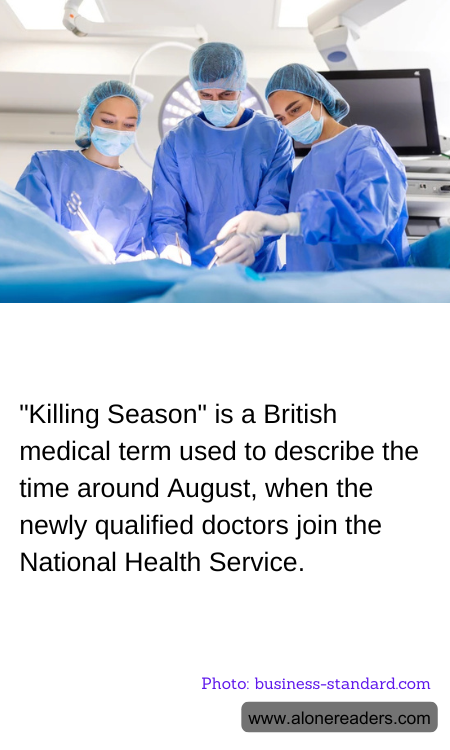
Every year, as the calendar turns to August, the British National Health Service (NHS) experiences a significant transition period that has colloquially become known as the "Killing Season." This term, though somewhat dramatic, refers to the time when newly qualified doctors, fresh from medical school, begin their first placements in hospitals across the UK. While the phrase might sound alarming, it highlights the challenges and pressures faced by both new doctors and the healthcare system during this critical time.
The transition from medical student to practicing doctor is a monumental step in a young physician's career. After years of rigorous study, these new doctors, often referred to as "junior doctors," are thrust into the fast-paced and demanding environment of the NHS. They are tasked with applying their theoretical knowledge to real-world scenarios, making critical decisions, and managing patient care under the supervision of more experienced colleagues. This period is both exciting and daunting, as they navigate the complexities of their new roles.
The term "Killing Season" underscores the potential risks associated with this transition. Studies have shown that there can be a slight increase in medical errors and patient mortality rates during this period. This is not necessarily a reflection of the competence of the new doctors but rather an indication of the steep learning curve they face. The NHS, aware of these challenges, has implemented various support systems to help ease the transition. These include mentorship programs, additional training sessions, and increased supervision to ensure patient safety and support the development of these young professionals.
Despite the ominous nickname, the "Killing Season" is also a time of renewal and growth for the NHS. The influx of new doctors brings fresh perspectives, enthusiasm, and a willingness to learn. These qualities are invaluable in a healthcare system that is constantly evolving and adapting to new medical advancements and patient needs. The presence of new doctors also encourages a culture of teaching and learning within hospitals, as experienced staff share their knowledge and expertise with the next generation of healthcare providers.
For patients, understanding the dynamics of this period can foster empathy and patience. While it is natural to feel apprehensive about being treated by a newly qualified doctor, it is important to remember that these individuals are highly trained and are working under the guidance of seasoned professionals. The NHS is committed to maintaining high standards of care, and the support structures in place are designed to ensure that patient safety remains a top priority.
In conclusion, the "Killing Season" is a term that captures the challenges and opportunities that come with the annual influx of new doctors into the NHS. While it highlights the potential for increased risks, it also emphasizes the importance of support, mentorship, and continuous learning in the medical profession. By understanding and addressing the unique needs of these young doctors, the NHS can continue to provide high-quality care while nurturing the development of future healthcare leaders.