More About This Card
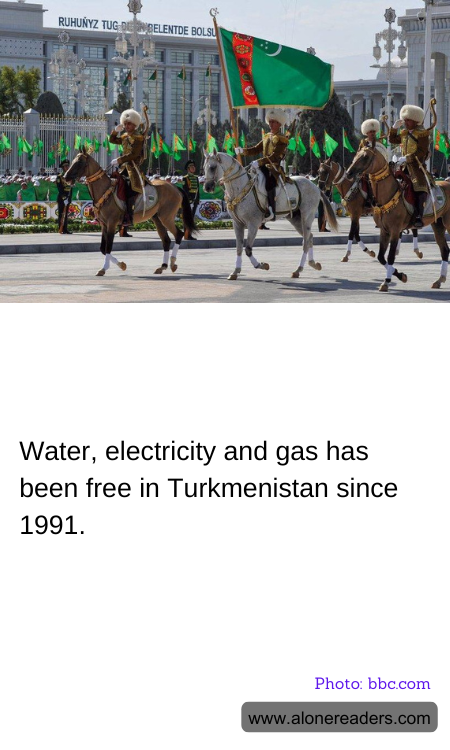
In the heart of Central Asia lies Turkmenistan, a nation known for its vast deserts, rich cultural heritage, and a unique approach to public welfare. Since 1991, the government of Turkmenistan has provided its citizens with free access to essential utilities such as water, electricity, and gas. This policy, initiated shortly after the country gained independence from the Soviet Union, was designed to ensure that all citizens could enjoy a basic standard of living without the financial burden of utility costs.
The provision of free utilities in Turkmenistan is a reflection of the country's substantial natural resources, particularly its vast reserves of natural gas. Turkmenistan is one of the world's leading producers of natural gas, and this abundance has allowed the government to subsidize these essential services for its population. By eliminating the cost of utilities, the government aimed to alleviate poverty and improve the quality of life for its citizens, fostering a sense of stability and security in the post-Soviet era.
While the policy of free utilities has been a significant benefit for many Turkmen citizens, it has also presented challenges. The lack of cost associated with these resources has sometimes led to overconsumption and waste. Without financial incentives to conserve, there is little motivation for individuals to use these resources efficiently. This has raised concerns about sustainability and the long-term viability of the policy, especially as global environmental issues become increasingly pressing.
Moreover, the infrastructure required to maintain the supply of free utilities is extensive and costly. The government must continually invest in the maintenance and expansion of pipelines, power lines, and water systems to ensure uninterrupted service. This financial burden is significant, and while Turkmenistan's natural gas wealth has supported these efforts thus far, fluctuations in global energy markets could pose future challenges.
Despite these concerns, the policy remains popular among the Turkmen people, who view it as a symbol of national pride and a testament to the country's resource wealth. It also serves as a reminder of the government's commitment to the welfare of its citizens, a cornerstone of Turkmenistan's social contract.
As the world moves towards more sustainable and efficient energy use, Turkmenistan faces the challenge of balancing its generous utility policy with the need for conservation and environmental responsibility. The future may require a reevaluation of how these resources are managed and distributed, ensuring that they remain available for generations to come while also contributing to global efforts to combat climate change.
In conclusion, Turkmenistan's policy of providing free water, electricity, and gas since 1991 is a unique approach to public welfare, rooted in the country's natural resource wealth. While it has brought significant benefits to its citizens, it also presents challenges that must be addressed to ensure sustainability and efficiency in the future. As the country navigates these complexities, it continues to stand as a fascinating example of how natural resources can be leveraged for the public good.