More About This Card
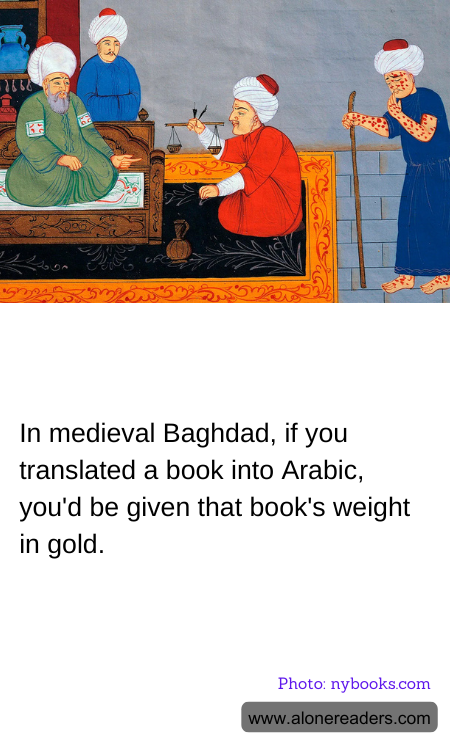
In the heart of the medieval Islamic world, Baghdad stood as a beacon of knowledge and culture. During the Abbasid Caliphate, particularly under the reign of Caliph Al-Ma'mun in the 9th century, the city became a hub for scholars, scientists, and translators. One of the most fascinating aspects of this intellectual renaissance was the extraordinary incentive offered to translators: they were rewarded with the weight of the books they translated in gold.
This remarkable practice was part of a broader cultural and scientific movement known as the Translation Movement. The Abbasid rulers, recognizing the value of knowledge from various cultures, actively sought to translate works from Greek, Persian, Indian, and other languages into Arabic. This initiative was not only a testament to the open-mindedness of the era but also a strategic effort to consolidate and expand the empire's intellectual resources.
The House of Wisdom, or Bayt al-Hikma, was the epicenter of this translation activity. It was an academic institution and library where scholars from diverse backgrounds gathered to study, translate, and innovate. The translation of texts covered a wide array of subjects, including philosophy, medicine, mathematics, astronomy, and more. By translating these works, the scholars of Baghdad preserved and enhanced the knowledge of ancient civilizations, which would later play a crucial role in the European Renaissance.
The incentive of rewarding translators with gold equivalent to the weight of the books they translated was not merely a financial transaction. It was a profound acknowledgment of the value of knowledge and the laborious effort involved in translation. This practice underscored the high esteem in which intellectual pursuits were held and encouraged the proliferation of scholarly activity. It also attracted some of the brightest minds of the time to Baghdad, further enriching the city's cultural and intellectual landscape.
This golden age of translation had lasting impacts on the world. The Arabic translations of Greek and other ancient texts became the primary means through which these works were reintroduced to Europe centuries later. The efforts of the translators in Baghdad thus served as a bridge between the ancient and modern worlds, ensuring the survival and dissemination of critical knowledge.
The story of medieval Baghdad's translation movement is a powerful reminder of the timeless value of knowledge and the importance of cultural exchange. It highlights how the pursuit of understanding can transcend borders and eras, fostering progress and innovation. In a world where information is more accessible than ever, the legacy of Baghdad's translators continues to inspire the pursuit of knowledge and the appreciation of diverse intellectual traditions.