More About This Card
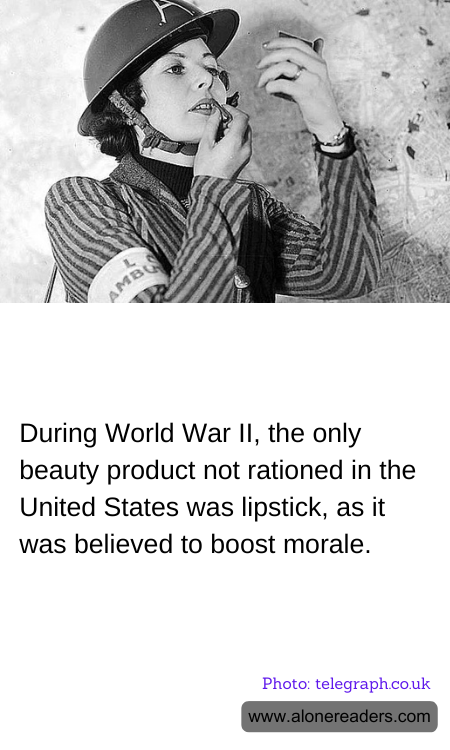
During World War II, the world was engulfed in a conflict that demanded immense sacrifices from both soldiers on the front lines and civilians on the home front. In the United States, rationing became a way of life as resources were diverted to support the war effort. Everyday items like sugar, rubber, and gasoline were strictly controlled to ensure that the military had what it needed. Yet, amidst these widespread shortages, one beauty product remained freely available: lipstick. This seemingly small exception played a surprisingly significant role in boosting morale during a time of great uncertainty and hardship.
Lipstick's exemption from rationing was not merely a matter of chance. It was a deliberate decision rooted in the belief that maintaining a sense of normalcy and personal dignity was crucial for morale. The vibrant hues of lipstick offered a splash of color in an otherwise drab and challenging period. For many women, applying lipstick became a daily ritual that provided a sense of empowerment and continuity. It was a small act of defiance against the grim realities of war, a way to assert one's identity and femininity in a world that seemed to be falling apart.
The psychological impact of lipstick during the war cannot be overstated. It served as a symbol of hope and resilience, a reminder that beauty and joy could still exist even in the darkest of times. Women who worked in factories, known as "Rosie the Riveters," often wore lipstick as part of their daily attire. It was a way to maintain a connection to their pre-war lives and to project confidence and strength as they took on roles traditionally held by men. The sight of women wearing lipstick was also a morale booster for soldiers, who saw it as a sign that life at home continued and that there was something worth fighting for.
Cosmetic companies played a role in this wartime effort by producing patriotic-themed lipsticks with names like "Victory Red." These products were marketed as a way for women to contribute to the war effort by boosting the spirits of those around them. The government even encouraged the production and use of lipstick, recognizing its value as a tool for maintaining public morale. In a time when so much was out of individuals' control, lipstick offered a small but meaningful way to make a personal statement and to feel a sense of agency.
In retrospect, the decision to keep lipstick off the rationing list was a testament to the power of small comforts in sustaining the human spirit. It highlighted the importance of psychological well-being during times of crisis and underscored the role of personal expression in fostering resilience. As we look back on this period, the story of lipstick during World War II serves as a reminder that even in the face of adversity, the pursuit of beauty and self-expression can be a powerful force for good.