More About This Card
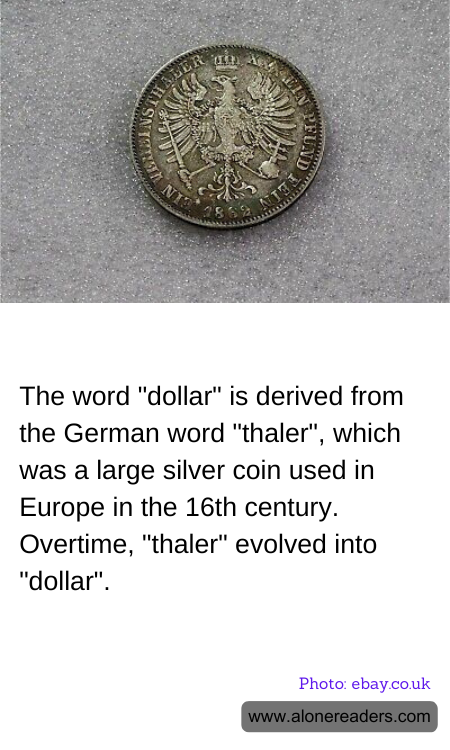
The word "dollar" is one of the most recognized terms in the world of finance, symbolizing economic power and stability. However, its origins are rooted in a fascinating historical journey that dates back to the 16th century in Europe. The term "dollar" is derived from the German word "thaler," which was used to describe a large silver coin that played a significant role in European commerce.
The story begins in the early 1500s in the region of Bohemia, now part of the Czech Republic, where a rich silver mine was discovered in the town of Joachimsthal. The silver extracted from this mine was used to mint coins known as "Joachimsthalers," named after the town. Over time, the name was shortened to "thaler," and these coins became widely circulated across Europe due to their consistent weight and high silver content. The thaler was valued for its reliability and became a standard for trade, influencing various currencies across the continent.
As the thaler gained popularity, its influence spread beyond the borders of Germany. The coin's reputation for quality and consistency made it a preferred choice for international trade, and it was adopted by several countries, each adapting the name to fit their language. In the Netherlands, for instance, it became known as the "daler," and in Scandinavia, it was referred to as the "daler" or "daler." This linguistic evolution continued as the coin made its way to the New World.
When European settlers arrived in North America, they brought with them the concept of the thaler. The English-speaking settlers anglicized the term to "dollar," and it quickly became the standard unit of currency in the colonies. The Spanish dollar, also known as the "piece of eight," was widely used in the American colonies and further cemented the term "dollar" in the region's economic vernacular. By the time the United States declared independence, the dollar was already a familiar concept, and it was officially adopted as the country's currency in 1792 with the Coinage Act.
The evolution of the word "dollar" from "thaler" is a testament to the interconnectedness of global trade and the influence of European commerce on the world. It highlights how a simple coin from a small town in Bohemia could leave a lasting legacy on the global economy. Today, the dollar is not just a currency; it is a symbol of economic strength and a reminder of the rich history that has shaped the financial systems we know today.
Understanding the origins of the word "dollar" provides a unique perspective on the historical forces that have shaped modern economies. It is a story of adaptation, influence, and the enduring power of a simple silver coin that transcended borders and languages to become a cornerstone of global commerce. As we continue to use the dollar in our daily lives, it is worth remembering the journey it has taken from the thaler to the dollar, a journey that reflects the dynamic and ever-evolving nature of human civilization.