More About This Card
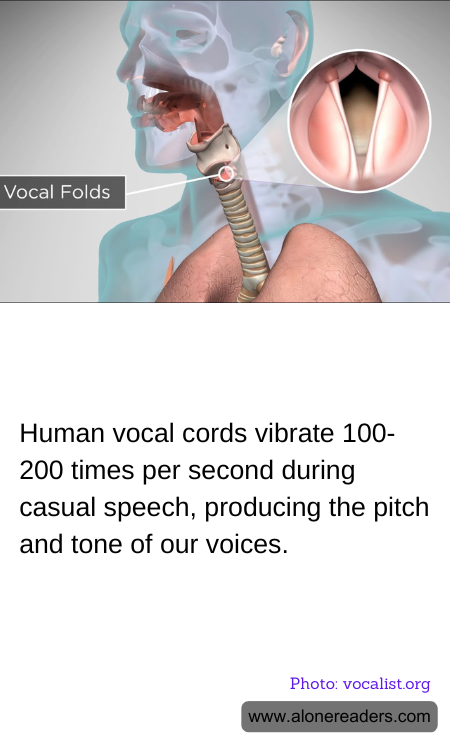
The human voice is a remarkable instrument, capable of conveying a vast array of emotions and ideas through the simple act of speaking. At the heart of this ability lies the vocal cords, also known as vocal folds, which vibrate at astonishing speeds to produce the sounds we recognize as speech. During casual conversation, these vocal cords vibrate between 100 to 200 times per second, a process that is fundamental to the creation of pitch and tone in our voices.
The vocal cords are located within the larynx, or voice box, which sits in the throat. When we speak, air from the lungs is pushed through the trachea and into the larynx. The vocal cords, which are two bands of muscle tissue, come together and vibrate as the air passes through them. This vibration is what generates sound. The frequency of these vibrations determines the pitch of the voice: faster vibrations produce higher pitches, while slower vibrations result in lower pitches. This is why men, whose vocal cords tend to be longer and thicker, generally have deeper voices than women, whose vocal cords are typically shorter and thinner.
The tone of our voice, which gives it its unique quality, is influenced by several factors, including the tension of the vocal cords and the shape of the vocal tract. The vocal tract acts as a resonating chamber, amplifying certain frequencies and dampening others, much like the body of a musical instrument. This is why no two voices sound exactly alike, even if they are speaking at the same pitch. The subtle variations in the shape and size of our vocal anatomy, combined with learned speech patterns and accents, contribute to the distinctiveness of each person's voice.
Understanding the mechanics of vocal cord vibration not only sheds light on how we produce speech but also highlights the complexity and adaptability of the human body. Our ability to modulate pitch and tone allows us to express a wide range of emotions and intentions, from the gentle lull of a bedtime story to the commanding presence of a public speech. This versatility is a testament to the intricate design of our vocal apparatus and its role in human communication.
The study of vocal cord vibration also has practical applications in fields such as speech therapy and vocal training. By analyzing how the vocal cords function, professionals can help individuals improve their speech clarity, vocal strength, and overall communication skills. This knowledge is invaluable for those who rely heavily on their voices, such as singers, actors, and public speakers, enabling them to maintain vocal health and achieve their desired vocal performance.
In essence, the rapid vibration of the vocal cords is a fundamental aspect of human speech, enabling us to communicate effectively and expressively. It is a process that occurs effortlessly and unconsciously, yet it is vital to the way we interact with the world around us. As we continue to explore the intricacies of the human voice, we gain a deeper appreciation for the complex interplay of biology and acoustics that allows us to speak, sing, and connect with one another.