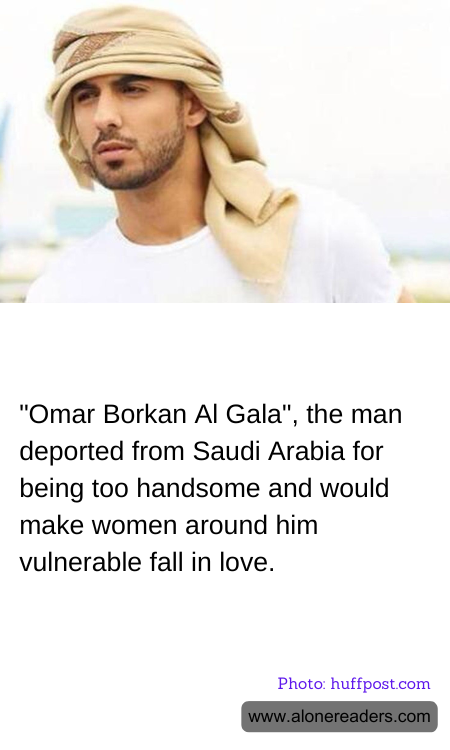
In the realm of extraordinary stories, few are as captivating as that of Omar Borkan Al Gala, a man whose striking looks reportedly led to his deportation from Saudi Arabia. This tale, which has intrigued people worldwide, centers around the notion that Al Gala's exceptional handsomeness posed a risk of causing women to become infatuated with him, thus making them vulnerable to his charms.
Omar Borkan Al Gala, a model, actor, and photographer from the United Arab Emirates, became an international sensation in 2013 when reports surfaced that he, along with two other men, was asked to leave Saudi Arabia. The reason? They were deemed "too handsome" by the religious police at a cultural festival in Riyadh. The authorities feared that their presence might lead to women falling for them, potentially causing a disruption in the conservative social fabric of the country.
The story quickly went viral, capturing the imagination of people across the globe. Al Gala's chiseled features, piercing eyes, and charismatic presence seemed to embody the very essence of allure. As the narrative spread, it sparked discussions about beauty standards, cultural norms, and the power of physical appearance. While some questioned the veracity of the claims, the incident undeniably highlighted the cultural tensions between modernity and tradition in certain parts of the world.
Despite the controversy, Omar Borkan Al Gala embraced his newfound fame with grace. He leveraged the attention to further his career in modeling and acting, becoming a sought-after figure in the fashion industry. His story resonated with many, not just because of its unusual nature, but also because it underscored the universal fascination with beauty and its impact on society.
Beyond the headlines, Al Gala's experience serves as a reminder of the diverse perspectives on beauty and attraction. It challenges us to consider how societal norms shape our perceptions and interactions. In a world where appearances often hold significant sway, his story invites reflection on the balance between admiration and objectification.
In conclusion, Omar Borkan Al Gala's tale is more than just a curious anecdote; it is a reflection of the complexities surrounding beauty and cultural expectations. While the idea of being "too handsome" may seem whimsical, it opens up broader conversations about identity, societal values, and the influence of physical appearance. As Al Gala continues to captivate audiences with his work, his story remains a testament to the enduring allure of beauty and the intriguing narratives it can inspire.
