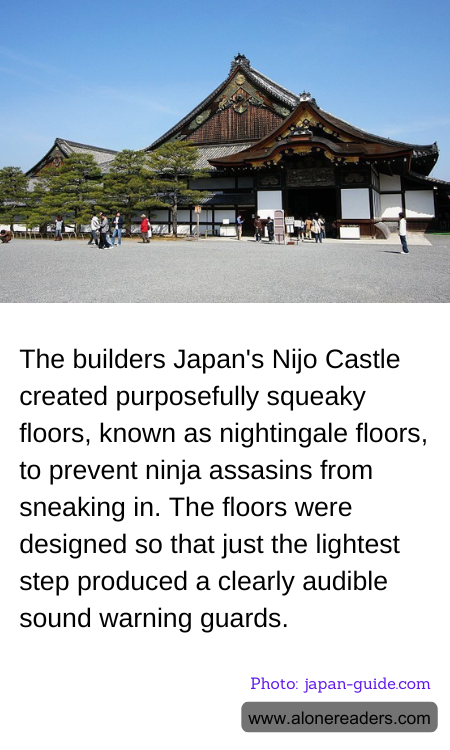
In the heart of Kyoto, Japan, stands the majestic Nijo Castle, a testament to the architectural ingenuity and cultural richness of the Edo period. Among its many fascinating features, the castle is renowned for its "nightingale floors," a clever defensive mechanism designed to thwart the stealthy approach of ninja assassins. These floors, known as "uguisubari" in Japanese, are a remarkable example of how architecture can serve as a silent guardian, protecting its inhabitants from unseen threats.
Constructed in the early 17th century under the orders of Tokugawa Ieyasu, the first shogun of the Tokugawa shogunate, Nijo Castle was not only a residence but also a symbol of power. The shogunate was well aware of the constant threat posed by ninjas, skilled assassins who could infiltrate even the most secure locations. To counter this, the builders of Nijo Castle devised an ingenious solution: floors that would sing like nightingales at the slightest pressure.
The nightingale floors are a marvel of engineering, crafted with a series of metal clamps and nails that rub against each other when stepped upon. This friction produces a chirping sound reminiscent of the song of a nightingale, hence the name. The design is so sensitive that even the lightest footfall triggers the mechanism, ensuring that no one could move through the corridors undetected. This auditory alert system was a crucial line of defense, allowing guards to be instantly aware of any intruders.
Beyond their practical purpose, the nightingale floors also reflect the aesthetic sensibilities of the time. The sound they produce is not a harsh alarm but a gentle, melodic chirp that blends harmoniously with the serene environment of the castle. This blend of functionality and beauty is a hallmark of Japanese design, where even the most utilitarian elements are crafted with an eye for elegance.
Today, visitors to Nijo Castle can experience the nightingale floors firsthand, stepping lightly across the ancient boards and listening to the soft chorus that has echoed through the halls for centuries. This unique feature not only offers a glimpse into the past but also serves as a reminder of the innovative spirit that characterized the Edo period. The nightingale floors stand as a testament to the ingenuity of their creators, who turned a simple architectural element into a sophisticated security system.
In a world where technology often overshadows tradition, the nightingale floors of Nijo Castle remind us of the timeless value of creativity and craftsmanship. They are a symbol of a bygone era, where the art of building was as much about protection as it was about beauty, and where even the floors could sing a song of vigilance and grace.
