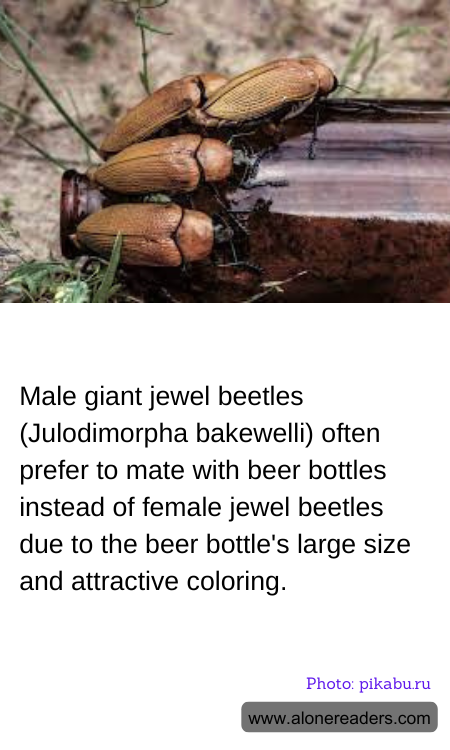
In the fascinating world of entomology, the mating behaviors of insects often reveal intriguing insights into their survival strategies. One such curious case involves the male giant jewel beetles, scientifically known as Julodimorpha bakewelli. These beetles, native to Australia, have developed a peculiar attraction that has puzzled scientists and amused observers: they often prefer to mate with beer bottles rather than their female counterparts.
The allure of beer bottles to these beetles lies in their size and coloration. Male giant jewel beetles are naturally drawn to large, shiny surfaces, which they associate with the ideal female mate. The beer bottles, often discarded in the beetles' natural habitat, mimic the glossy, brownish hue of the female beetles. This visual similarity, combined with the bottle's substantial size, makes them an irresistible target for the males. The phenomenon is a classic example of what scientists call "supernormal stimuli," where an exaggerated version of a natural stimulus elicits a stronger response than the real thing.
This behavior, while seemingly humorous, highlights a significant aspect of the beetles' mating rituals. In their natural environment, the males are programmed to seek out the largest and most vibrant females, as these traits are typically associated with higher fertility and better chances of reproductive success. However, the introduction of man-made objects like beer bottles into their ecosystem has inadvertently disrupted this natural selection process. The males, mistaking the bottles for potential mates, spend their energy and time attempting to copulate with these inanimate objects, often to the detriment of their reproductive success.
The implications of this behavior extend beyond mere curiosity. It serves as a poignant reminder of how human activities can inadvertently impact wildlife. The discarded bottles, while seemingly innocuous, interfere with the natural behaviors of these beetles, potentially affecting their population dynamics. This situation underscores the importance of mindful waste disposal and the broader impact of human presence on ecosystems.
In response to these findings, researchers and conservationists advocate for increased awareness and efforts to minimize such disruptions. By understanding the unintended consequences of our actions, we can take steps to mitigate their effects on wildlife. Simple measures, such as proper disposal of waste and reducing litter in natural habitats, can help preserve the delicate balance of these ecosystems.
The story of the male giant jewel beetles and their unusual attraction to beer bottles is a testament to the complexity and adaptability of nature. It also serves as a gentle reminder of our responsibility to coexist harmoniously with the myriad forms of life that share our planet. As we continue to explore and understand the natural world, let us strive to protect it, ensuring that future generations can marvel at its wonders as we do today.
