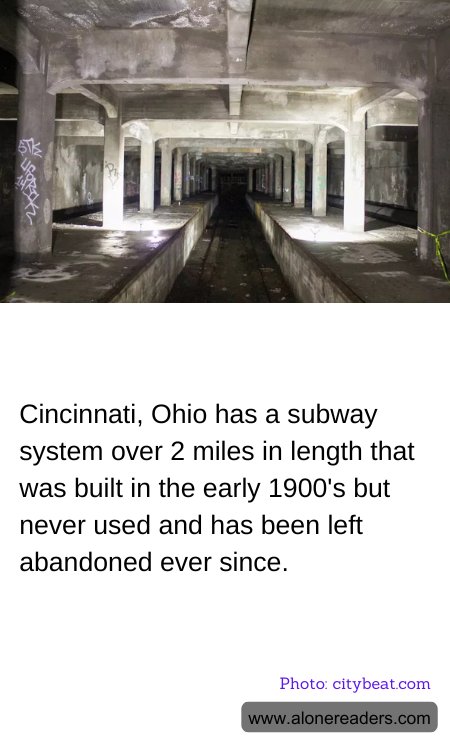
Nestled beneath the bustling streets of Cincinnati, Ohio, lies a forgotten relic of urban ambition—a subway system that never saw the light of day. This subterranean network, stretching over two miles, was conceived in the early 1900s as a solution to the city's growing transportation needs. However, despite the grand vision and significant investment, the Cincinnati subway remains an unfinished dream, abandoned and untouched for nearly a century.
The story of Cincinnati's subway begins in the early 20th century, a time when the city was rapidly expanding. With the rise of automobiles and the increasing congestion on the streets, city planners sought to create a modern transportation system that could efficiently move people across the city. In 1916, voters approved a bond issue to fund the construction of a subway, marking the beginning of an ambitious project that promised to transform Cincinnati's transit landscape.
Construction commenced in 1920, and by 1925, significant progress had been made. The subway tunnels, which run beneath Central Parkway, were largely completed, and the project seemed poised for success. However, a series of unfortunate events conspired to derail the subway's completion. The Great Depression hit, severely impacting the city's finances and halting further construction. Additionally, the rise of the automobile and the development of new roadways shifted public interest away from rail-based transit solutions.
As the years passed, the unfinished subway became a forgotten chapter in Cincinnati's history. The tunnels, which were once filled with the promise of a bustling transit system, now stand silent and empty. Despite occasional proposals to repurpose the space, the subway remains largely untouched, serving as a time capsule of early 20th-century engineering and urban planning.
Today, the Cincinnati subway is a source of fascination and intrigue. Urban explorers and history enthusiasts are drawn to its mysterious allure, eager to glimpse the remnants of a bygone era. The tunnels, though off-limits to the public, continue to capture the imagination of those who ponder what might have been had the subway been completed and put into operation.
The abandoned subway serves as a poignant reminder of the challenges and unpredictability of urban development. It stands as a testament to the city's ambitious past and the ever-changing nature of transportation needs. While Cincinnati has moved on to embrace other forms of transit, the subway remains a unique piece of its history, a hidden landmark that tells the story of a city striving for progress in a rapidly changing world.
In the end, the Cincinnati subway is more than just a collection of unused tunnels; it is a symbol of dreams deferred and the enduring spirit of a city that continues to evolve. As Cincinnati looks to the future, the lessons of its past remain etched in the shadows beneath its streets, waiting to be rediscovered by those who seek to understand the complexities of urban growth and the legacy of unfinished dreams.
