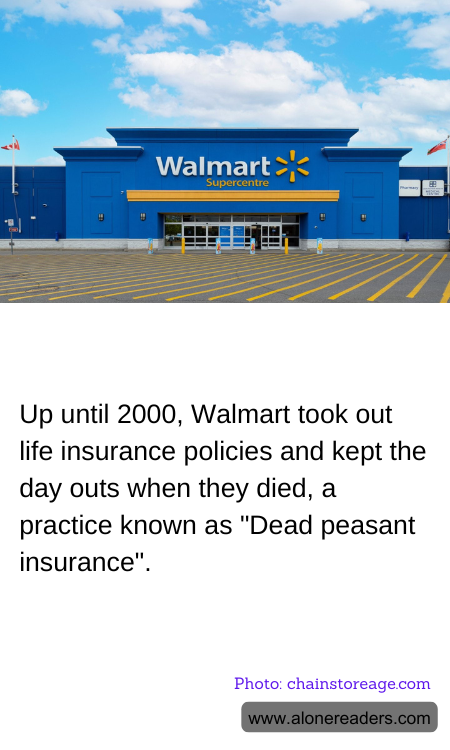
In the corporate world, certain practices have often sparked debates about ethics and morality. One such practice, which came to light in the late 1990s, involved major corporations like Walmart taking out life insurance policies on their employees without their knowledge. This practice, colloquially known as "dead peasant insurance," raised eyebrows and questions about corporate ethics and employee rights.
The term "dead peasant insurance" refers to a situation where companies purchase life insurance policies on their employees and name themselves as the beneficiaries. This means that when an employee passes away, the company receives the insurance payout. While this practice might seem unusual, it was not illegal. Companies justified it as a way to protect against the financial loss that might occur due to the death of an employee, especially those in key positions. However, in many cases, these policies were taken out on rank-and-file employees, whose deaths would not significantly impact the company's financial standing.
Walmart, one of the largest retail corporations in the world, was among the companies that engaged in this practice until the early 2000s. The company reportedly took out life insurance policies on a large number of its employees, reaping the benefits upon their deaths. This practice was not disclosed to the employees or their families, leading to public outcry when it was eventually uncovered. Critics argued that it was unethical for companies to profit from the deaths of their employees, especially without their consent or knowledge.
The controversy surrounding "dead peasant insurance" led to legal challenges and changes in legislation. In the early 2000s, several lawsuits were filed against companies, including Walmart, by the families of deceased employees. These lawsuits argued that the practice was exploitative and that the companies had no right to benefit from the deaths of their employees. As a result of these legal battles and the negative publicity, many companies, including Walmart, ceased the practice.
In response to the controversy, changes in tax laws and regulations were implemented to curb the use of such insurance policies. The new regulations required companies to obtain consent from employees before purchasing life insurance policies on them and to notify them if they were named as beneficiaries. These changes aimed to ensure transparency and protect the rights of employees.
The "dead peasant insurance" saga serves as a reminder of the importance of ethical considerations in business practices. While companies have the right to protect their financial interests, it is crucial to balance this with respect for employee rights and transparency. The legacy of this practice highlights the need for ongoing scrutiny and regulation to ensure that corporate actions align with ethical standards and societal values.
