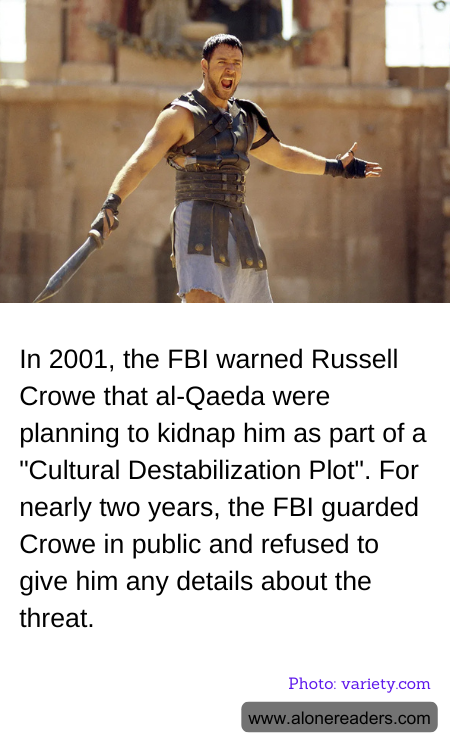
In the early 2000s, a peculiar and unsettling chapter unfolded in the life of acclaimed actor Russell Crowe, known for his roles in films such as "Gladiator" and "A Beautiful Mind." In 2001, the FBI approached Crowe with a chilling warning: al-Qaeda, the notorious terrorist organization, was allegedly planning to kidnap him. This plot was reportedly part of a broader strategy termed "Cultural Destabilization," aimed at undermining Western society by targeting high-profile figures in the entertainment industry.
The details surrounding this alleged plot remain shrouded in mystery, as the FBI provided Crowe with scant information about the threat. Despite the lack of specifics, the gravity of the situation was clear, prompting the agency to take significant protective measures. For nearly two years, the FBI assigned agents to shadow Crowe in public, ensuring his safety during a time when global tensions were high in the aftermath of the September 11 attacks.
Crowe himself has spoken about the experience, expressing a mix of gratitude and bewilderment at the situation. The actor, who was at the peak of his career during this period, found the constant presence of security both reassuring and intrusive. The lack of transparency from the FBI left him with more questions than answers, adding an element of psychological strain to the already intense demands of his professional life.
This episode highlights the complex interplay between celebrity culture and global security concerns. The notion that a terrorist organization would target a Hollywood actor as part of a destabilization strategy underscores the symbolic power attributed to cultural icons. It also reflects the unpredictable nature of threats in a world where the lines between entertainment and geopolitics can blur in unexpected ways.
While the specific motivations behind the alleged plot remain speculative, the incident serves as a reminder of the diverse tactics employed by extremist groups to achieve their objectives. It also illustrates the challenges faced by law enforcement agencies in balancing the need for security with the rights and privacy of individuals, particularly those in the public eye.
In the years since, Russell Crowe has continued to enjoy a successful career, seemingly unscathed by the shadow of this bizarre episode. The story, however, remains a curious footnote in the annals of Hollywood history, a testament to the unpredictable intersections of fame, security, and global politics. As the world continues to grapple with the complexities of international terrorism, the tale of Crowe's near-kidnapping serves as a poignant reminder of the diverse and often unexpected ways in which cultural figures can become entangled in the broader narratives of our time.
