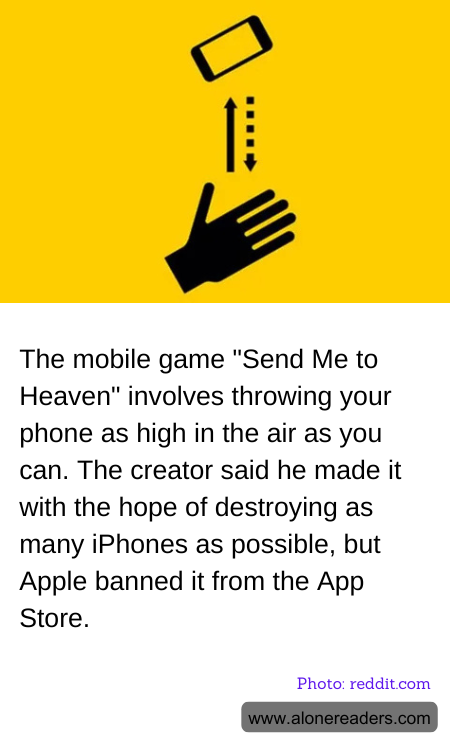
In the ever-evolving world of mobile gaming, creativity knows no bounds. However, some games push the boundaries of conventional gameplay, often leading to controversy and debate. One such game is "Send Me to Heaven," a mobile app that challenges players to throw their phones as high as possible. The game's creator, Petr Šejdl, designed it with a rather unconventional goal in mind: to destroy as many iPhones as possible. This unique premise quickly caught the attention of both users and app store regulators, leading to its ban from Apple's App Store.
"Send Me to Heaven" is a game that thrives on the thrill of risk-taking. Players are encouraged to toss their phones into the air, with the app measuring the height achieved. The higher the throw, the better the score. While the concept might sound simple, it inherently involves a significant risk of damaging the device, which is precisely what Šejdl intended. He openly admitted that his motivation was to see how many iPhones could be destroyed in the process, a statement that did not sit well with Apple.
Apple's decision to ban "Send Me to Heaven" from its App Store was based on its policy against apps that could potentially damage devices. The company has always maintained a strict guideline to ensure the safety and security of its users and their devices. By encouraging users to engage in activities that could lead to physical harm to their phones, the game was deemed inappropriate for the platform. This move by Apple was not just about protecting their devices but also about safeguarding users from potential accidents or injuries that could occur during gameplay.
Despite its ban on the App Store, "Send Me to Heaven" found a home on the Google Play Store, where it remains available for Android users. The game's presence on this platform has sparked discussions about the responsibilities of app developers and the ethical considerations of creating games that encourage potentially harmful behavior. While some users find the game amusing and enjoy the challenge it presents, others criticize it for promoting reckless actions that could lead to unnecessary expenses or even personal injury.
The story of "Send Me to Heaven" serves as a reminder of the delicate balance between innovation and responsibility in the world of mobile gaming. As developers continue to push the boundaries of what games can be, they must also consider the potential consequences of their creations. While the game may have achieved its creator's goal of generating buzz and controversy, it also highlights the importance of adhering to platform guidelines designed to protect users and their devices.
In conclusion, "Send Me to Heaven" is a testament to the diverse and sometimes contentious nature of mobile gaming. It challenges both players and developers to think critically about the impact of their actions and the role of games in our lives. As technology continues to advance, the gaming industry will undoubtedly face new challenges and opportunities, but the core principles of safety and responsibility must remain at the forefront of innovation.
