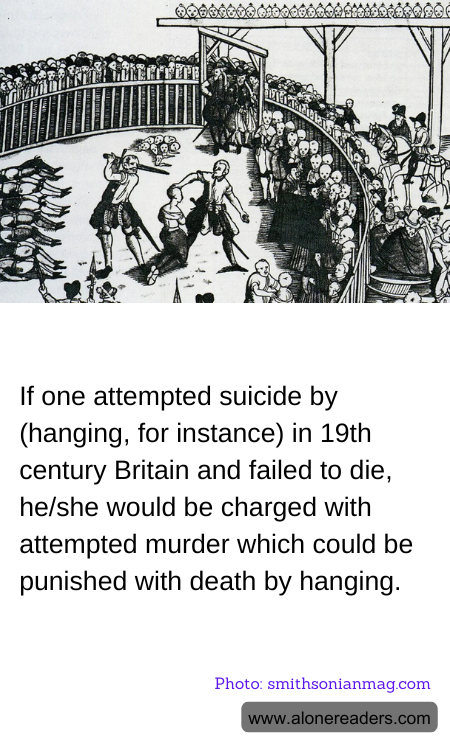
In 19th century Britain, the legal system was a complex tapestry of laws that often reflected the societal norms and moral beliefs of the time. Among these laws was a particularly harsh stance on suicide, which was considered both a sin and a crime. The act of attempting suicide was not merely seen as a personal tragedy but as a criminal offense against society and God. This perspective was deeply rooted in religious beliefs that life was a divine gift, and taking one's own life was a violation of divine law.
If an individual attempted suicide by hanging or any other means and failed, the consequences were severe. The law treated the attempt as a criminal act equivalent to attempted murder. This classification stemmed from the belief that the individual was attempting to destroy a life, even if it was their own. As a result, those who survived a suicide attempt could find themselves facing the grim irony of being charged with a crime that carried the death penalty—death by hanging.
This legal paradox highlights the punitive nature of the justice system at the time, which prioritized punishment over understanding or rehabilitation. The rationale was that by punishing the act of attempted suicide, society could deter others from considering it. However, this approach failed to address the underlying issues that led individuals to such desperate actions, such as mental illness, poverty, or personal despair.
The treatment of suicide and attempted suicide in 19th century Britain underscores the lack of mental health awareness and support systems available at the time. There was little understanding of mental health conditions, and those suffering from such issues were often stigmatized and marginalized. The legal system's response to suicide attempts was not only punitive but also indicative of a broader societal failure to provide compassion and support to those in need.
Over time, attitudes towards suicide and mental health have evolved significantly. Modern perspectives emphasize understanding, prevention, and support rather than punishment. The shift reflects a growing recognition of the complexities of mental health and the importance of providing care and assistance to those struggling with suicidal thoughts.
In conclusion, the harsh treatment of attempted suicide in 19th century Britain serves as a historical reminder of the need for compassion and understanding in addressing mental health issues. It highlights the progress society has made in recognizing the importance of mental health care and the ongoing need to support individuals in crisis with empathy and effective interventions.
