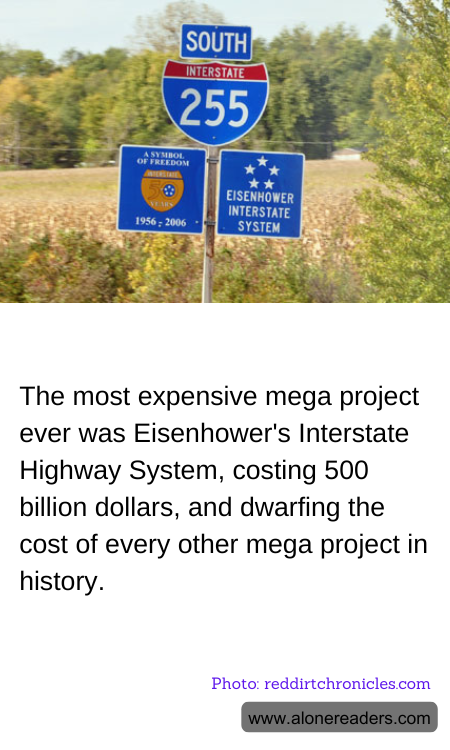
The Eisenhower Interstate Highway System stands as a monumental achievement in American infrastructure, representing not only a feat of engineering but also a significant investment in the nation's future. Initiated in 1956 under President Dwight D. Eisenhower, this ambitious project aimed to create a comprehensive network of highways that would connect every major city in the United States. The system was designed to facilitate efficient transportation, bolster economic growth, and enhance national defense. With a staggering cost of 500 billion dollars, adjusted for inflation, it remains the most expensive mega project in history, dwarfing the financial scale of any other infrastructure endeavor.
The vision for the Interstate Highway System was born out of Eisenhower's experiences during World War II, where he witnessed the strategic advantages of Germany's autobahn network. Recognizing the need for a similar system in the United States, Eisenhower championed the Federal-Aid Highway Act of 1956, which laid the groundwork for the construction of 41,000 miles of interstate highways. This vast network was designed to connect rural and urban areas, facilitating the movement of goods and people across the country with unprecedented speed and efficiency.
The economic impact of the Interstate Highway System has been profound. By reducing travel time and transportation costs, it has played a crucial role in the expansion of commerce and industry. The highways have enabled businesses to reach broader markets and have been instrumental in the growth of suburban areas, reshaping the American landscape. Moreover, the system has created millions of jobs, not only during its construction but also in the industries it has supported and expanded.
Beyond its economic benefits, the Interstate Highway System has had significant social and cultural implications. It has made long-distance travel more accessible to the average American, fostering a sense of national unity and cultural exchange. The highways have become a symbol of freedom and mobility, allowing families to explore the vastness of the country and experience its diverse landscapes and communities.
Despite its successes, the project was not without challenges and criticisms. The construction of the highways often led to the displacement of communities and environmental concerns. Urban areas, in particular, saw neighborhoods divided or destroyed to make way for the new roads. These issues have sparked ongoing debates about urban planning and the balance between infrastructure development and community preservation.
In conclusion, the Eisenhower Interstate Highway System remains a testament to the power of visionary leadership and the transformative potential of large-scale infrastructure projects. Its legacy is evident in the way Americans live, work, and travel today. While its cost was unprecedented, the benefits it has provided over the decades have far outweighed the initial investment, cementing its place as a cornerstone of American progress and innovation.
