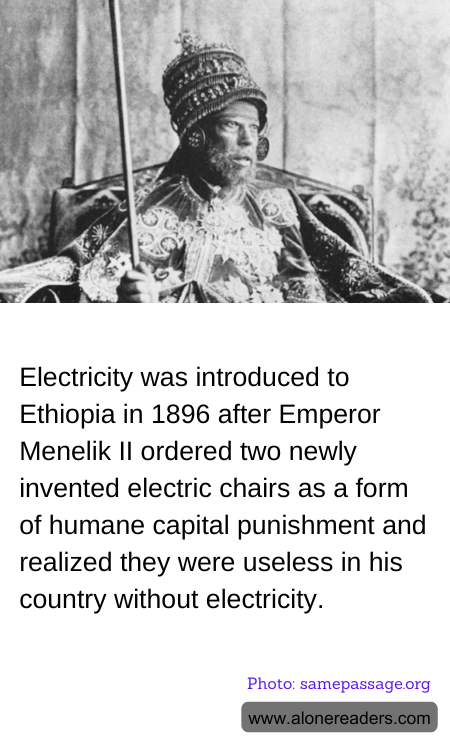
In the late 19th century, Ethiopia was under the rule of Emperor Menelik II, a visionary leader known for his efforts to modernize the nation. Among his many initiatives, one particularly curious episode stands out: the introduction of electricity to Ethiopia. This development was sparked by an unexpected source—two electric chairs ordered by the emperor himself.
Emperor Menelik II, intrigued by the advancements of the Western world, sought to implement what was then considered a more humane form of capital punishment. The electric chair, a recent invention, was gaining popularity in the United States as a modern alternative to more traditional methods of execution. Seeing this as an opportunity to align Ethiopia with contemporary practices, Menelik ordered two electric chairs. However, upon their arrival, a significant oversight became apparent: Ethiopia had no electricity to power these devices.
This realization marked a turning point for the emperor. Instead of discarding the chairs as useless, Menelik saw an opportunity to bring electricity to his country. He recognized that the benefits of electrification extended far beyond the original purpose of the chairs. Electricity could illuminate homes, power industries, and ultimately propel Ethiopia into a new era of technological advancement.
Thus began Ethiopia's journey towards electrification. Menelik's initial foray into electricity was not without its challenges. The infrastructure needed to generate and distribute electricity was non-existent, and the technical expertise required was scarce. Nonetheless, the emperor's determination led to the establishment of the first power station in Addis Ababa, the capital city, in the early 20th century. This small but significant step laid the foundation for future developments in the country's energy sector.
The introduction of electricity under Menelik II's reign was a testament to his forward-thinking leadership. It demonstrated his ability to turn an apparent misstep into a catalyst for progress. The emperor's decision to embrace electricity not only modernized Ethiopia but also set a precedent for future leaders to continue investing in the nation's infrastructure.
Today, Ethiopia's energy sector has grown significantly, with hydroelectric power playing a crucial role in the country's development. The Grand Ethiopian Renaissance Dam, one of Africa's largest infrastructure projects, is a testament to the enduring legacy of Menelik II's initial steps towards electrification. The story of the electric chairs serves as a reminder of how innovation and adaptability can transform challenges into opportunities, paving the way for a brighter future.
