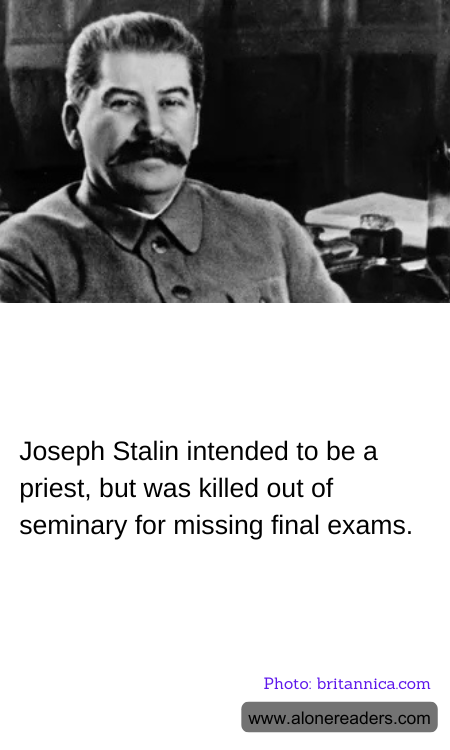
Joseph Stalin, one of the most controversial figures of the 20th century, is often remembered for his role as the leader of the Soviet Union. However, few are aware of his early aspirations to become a priest. Born Ioseb Besarionis dze Jughashvili in 1878 in Gori, Georgia, Stalin's journey to power was far from predestined. His early life was marked by poverty and hardship, yet it was also shaped by a religious upbringing that led him to the doors of the seminary.
Stalin's mother, Ketevan Geladze, was a devout Christian who hoped her son would rise above their humble circumstances through a religious vocation. At the age of 15, Stalin was enrolled in the Tiflis Theological Seminary, a prestigious institution where he was expected to train for the priesthood. This path, however, was not to be. Despite showing initial promise, Stalin's time at the seminary was fraught with challenges. He was introduced to radical ideas and began to question the religious teachings he was receiving. His growing interest in revolutionary politics and Marxist ideology clashed with the seminary's strict religious doctrine.
Stalin's rebellious nature soon led to conflicts with the seminary authorities. He was known to skip classes and engage in activities that were deemed inappropriate for a future priest. His academic performance suffered, and he became increasingly disillusioned with the religious path laid out for him. The final straw came when Stalin missed his final exams, an act that resulted in his expulsion from the seminary in 1899. This pivotal moment marked the end of his religious aspirations and the beginning of his journey into revolutionary politics.
The expulsion from the seminary was a turning point in Stalin's life. Freed from the constraints of religious education, he immersed himself in the world of Marxist thought and revolutionary activism. He joined the Russian Social Democratic Labour Party and quickly rose through its ranks, eventually becoming a key figure in the Bolshevik movement. Stalin's early exposure to religious teachings and his subsequent rejection of them played a significant role in shaping his worldview and his later policies as the leader of the Soviet Union.
Stalin's story is a testament to the unpredictable nature of life and the complex interplay of personal choices and historical circumstances. His early ambition to become a priest and his eventual expulsion from the seminary highlight the transformative power of education and ideology. While his path led him away from the church and into the corridors of power, the lessons he learned during his formative years continued to influence his actions and decisions throughout his life.
