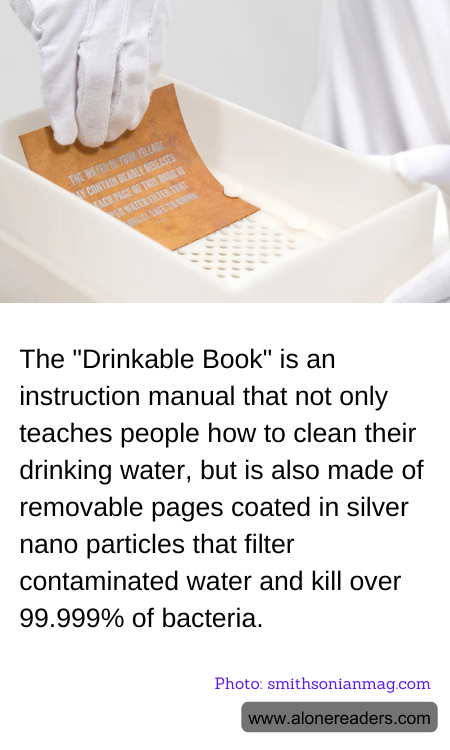
In a world where access to clean drinking water remains a critical challenge for millions, innovative solutions are essential to address this pressing issue. One such groundbreaking invention is the "Drinkable Book," a unique tool that not only educates individuals on water purification but also serves as a practical solution to filter contaminated water. This remarkable book is a testament to the power of combining education with technology to tackle global health challenges.
The "Drinkable Book" is ingeniously designed to serve a dual purpose. Each page of the book is an instruction manual, providing vital information on how to purify water effectively. The instructions are straightforward and accessible, ensuring that people from various backgrounds can understand and implement the guidance. However, what truly sets this book apart is its physical composition. The pages are coated with silver nanoparticles, a technology known for its potent antibacterial properties. When water passes through these pages, the silver nanoparticles act as a filter, removing over 99.999% of harmful bacteria, making the water safe to drink.
This innovative approach not only provides immediate access to clean water but also empowers individuals with the knowledge to sustain their health. The "Drinkable Book" is particularly impactful in regions where traditional water purification methods are either unavailable or too costly. By offering a portable and affordable solution, it addresses the needs of communities that are most vulnerable to waterborne diseases.
The development of the "Drinkable Book" is a collaborative effort involving scientists, engineers, and designers who are committed to creating sustainable solutions for global challenges. The book's design is both practical and environmentally friendly. Each page can filter up to 100 liters of water, and a single book can provide clean water for a person for up to four years. This longevity ensures that the book is not just a temporary fix but a long-term solution for those in need.
Moreover, the "Drinkable Book" serves as a powerful educational tool. By incorporating instructions on water safety and hygiene, it raises awareness about the importance of clean water and encourages communities to adopt healthier practices. This dual function of education and filtration makes the book a valuable resource in the fight against waterborne illnesses.
In conclusion, the "Drinkable Book" is a shining example of how innovation can be harnessed to address some of the world's most pressing issues. By combining education with cutting-edge technology, it offers a practical and sustainable solution to the global water crisis. As we continue to seek ways to improve access to clean water, the "Drinkable Book" stands out as a beacon of hope, demonstrating that with creativity and collaboration, we can make a significant impact on global health and well-being.
