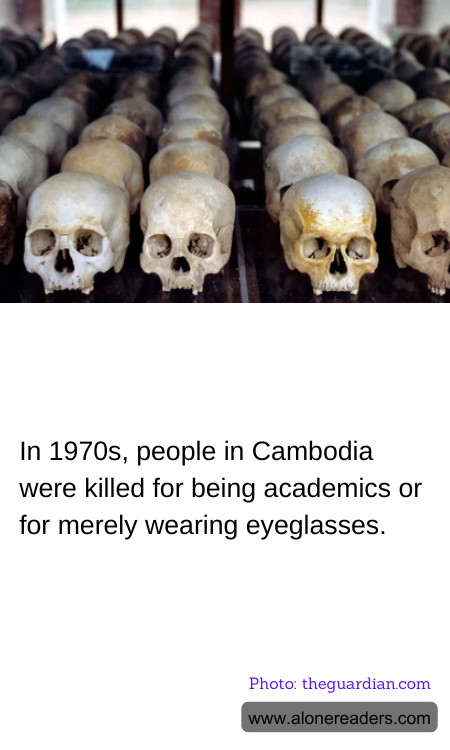
The 1970s in Cambodia were marked by one of the most tragic and brutal periods in the country's history, as the Khmer Rouge regime, led by Pol Pot, sought to transform the nation into a classless agrarian society. This radical vision led to the systematic targeting and execution of intellectuals, professionals, and anyone perceived as a threat to the regime's ideology. Among the most shocking aspects of this genocide was the persecution of individuals for being academics or for merely wearing eyeglasses, which were seen as symbols of intellectualism.
The Khmer Rouge came to power in 1975, following years of civil war and instability. Their vision for Cambodia was to create a utopian society free from the influences of capitalism and Western culture. To achieve this, they believed it was necessary to eliminate anyone who might oppose their radical ideas. Intellectuals, professionals, and those with any form of education were seen as potential threats. The regime's leaders viewed these individuals as carriers of Western influence and as obstacles to their agrarian revolution.
Wearing eyeglasses became a deadly liability during this time. The Khmer Rouge associated glasses with literacy and education, and thus, with the intellectual class they so vehemently opposed. This simplistic and brutal logic led to the persecution of countless individuals who were either executed or sent to labor camps where they faced starvation, disease, and overwork. The regime's paranoia extended to anyone who appeared to be educated or who might question their authority, resulting in the deaths of teachers, doctors, engineers, and even students.
The impact of this genocide was devastating. It is estimated that between 1.7 to 2 million people, nearly a quarter of Cambodia's population at the time, perished under the Khmer Rouge regime. The loss of so many educated individuals left a lasting scar on the nation, severely hindering its development for decades. The destruction of the intellectual class meant that Cambodia had to rebuild its educational and professional institutions almost from scratch in the years following the regime's fall in 1979.
The horrors of the Khmer Rouge era serve as a stark reminder of the dangers of extremist ideologies and the dehumanization of individuals based on arbitrary characteristics. The persecution of people for being academics or for wearing eyeglasses highlights the irrationality and brutality of the regime's policies. Today, Cambodia continues to heal from this dark chapter in its history, striving to honor the memory of those who were lost and to ensure that such atrocities are never repeated.
