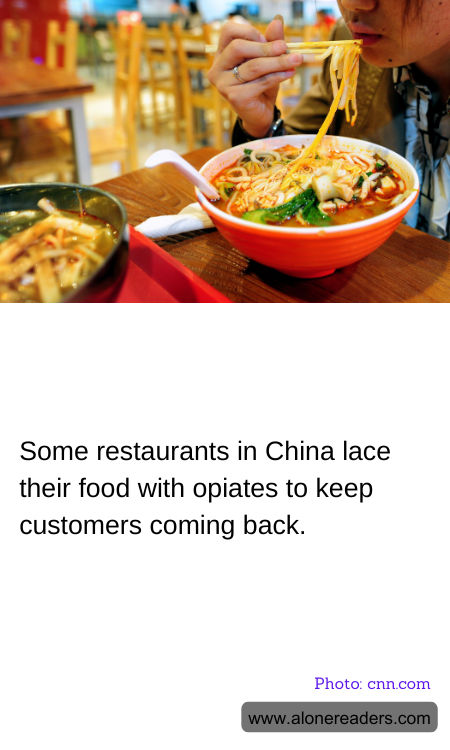
In recent years, a troubling trend has emerged in some restaurants across China, where unscrupulous operators have been found to lace their dishes with opiates to ensure repeat business. This practice, while not widespread, has raised significant concerns among consumers and authorities alike, highlighting the lengths to which some establishments will go to secure a loyal customer base.
The use of opiates in food preparation is not only unethical but also illegal. These substances, which include compounds like morphine and codeine, are known for their addictive properties. When consumed, they can create a sense of euphoria and dependency, leading diners to return to the same restaurant repeatedly, often without understanding why they feel compelled to do so. This manipulation of consumer behavior through chemical means is a clear violation of food safety regulations and poses serious health risks.
The Chinese government has taken steps to address this issue, conducting inspections and imposing strict penalties on those found guilty of such practices. In recent years, several high-profile cases have been reported, resulting in the closure of offending establishments and the arrest of their owners. These actions serve as a warning to other businesses that might consider similar tactics, emphasizing the importance of maintaining ethical standards in the food industry.
Public awareness campaigns have also been launched to educate consumers about the potential dangers of adulterated food. These initiatives aim to empower diners to make informed choices and report any suspicious activity to the authorities. By fostering a culture of vigilance and accountability, it is hoped that such unethical practices can be eradicated.
Despite these efforts, the challenge remains significant. The sheer size of China's food industry, coupled with the competitive nature of the market, means that some restaurants may still be tempted to cut corners in pursuit of profit. However, the growing demand for transparency and quality assurance from consumers is pushing the industry towards higher standards.
Ultimately, the responsibility for ensuring food safety lies with both the authorities and the consumers. While regulatory bodies must continue to enforce stringent checks and balances, diners must remain vigilant and informed. By working together, it is possible to create an environment where the focus is on quality and integrity, rather than deceit and exploitation.
As the global community becomes increasingly aware of such issues, it is crucial to remember that the vast majority of restaurants in China operate with integrity and dedication to their craft. The actions of a few should not overshadow the hard work and commitment of many who strive to provide delicious and safe dining experiences. Through continued vigilance and cooperation, the food industry can move towards a future where such unethical practices are a thing of the past.
