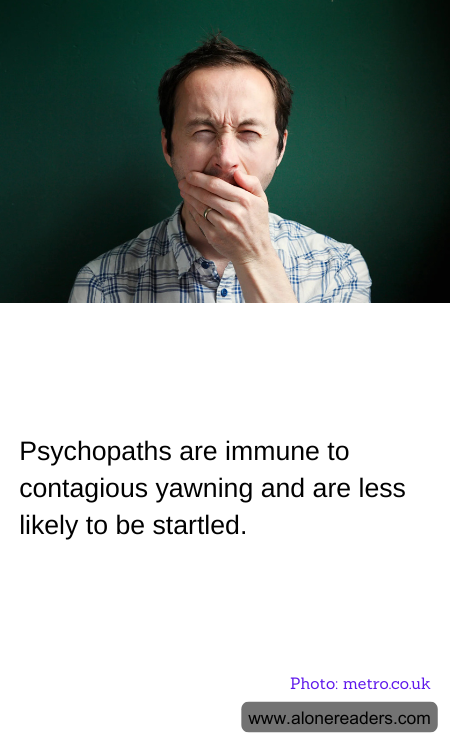
The human experience is filled with a myriad of social cues and responses that bind us together, often in ways we don't consciously recognize. Among these is the phenomenon of contagious yawning, a curious reflex that occurs when we see someone else yawn. This seemingly trivial act is actually linked to empathy, a trait that allows us to connect with others on an emotional level. However, recent studies suggest that individuals with psychopathic traits may be immune to this reflex, offering intriguing insights into the nature of empathy and emotional connectivity.
Psychopathy is characterized by a lack of empathy, shallow emotions, and often, antisocial behavior. Research has shown that psychopaths are less likely to engage in contagious yawning, a behavior that is believed to be rooted in the ability to empathize. This lack of response to yawning is not merely a quirky trait but rather a reflection of the diminished capacity for emotional resonance with others. The absence of this reflex in psychopaths underscores the broader deficits in their emotional and social processing.
In addition to their immunity to contagious yawning, psychopaths are also less likely to be startled by sudden stimuli. The startle reflex is an automatic response to unexpected events, such as a loud noise or a sudden movement, and is typically heightened in situations perceived as threatening. For most people, this reflex is a protective mechanism, preparing the body to respond to potential danger. However, psychopaths often exhibit a muted startle response, which may be linked to their reduced fear and anxiety levels. This blunted reaction can contribute to their risk-taking behavior and lack of concern for the consequences of their actions.
The diminished startle response and immunity to contagious yawning in psychopaths highlight the complex interplay between physiological responses and emotional processing. These traits suggest that psychopaths experience the world differently, with a reduced capacity for emotional engagement and a distinct approach to social interactions. Understanding these differences is crucial for developing more effective interventions and treatments for individuals with psychopathic traits.
While the absence of contagious yawning and a muted startle reflex might seem like minor quirks, they provide valuable insights into the neurological and psychological underpinnings of psychopathy. These findings emphasize the importance of empathy and emotional connectivity in human interactions and highlight the unique challenges faced by individuals with psychopathic traits. By exploring these differences, researchers hope to shed light on the broader spectrum of human behavior and the factors that contribute to empathy and emotional engagement.
In conclusion, the study of psychopathy and its impact on behaviors like contagious yawning and the startle reflex offers a fascinating glimpse into the complexities of human emotion and social interaction. As research continues to unravel the mysteries of the psychopathic mind, it holds the promise of enhancing our understanding of empathy, emotional connectivity, and the diverse ways in which individuals experience the world.
