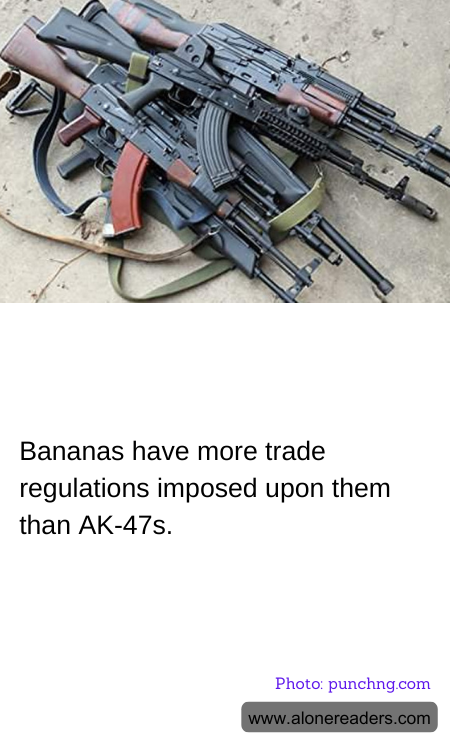
In the complex world of international trade, it might come as a surprise that bananas, a staple fruit enjoyed by millions worldwide, face more stringent trade regulations than AK-47s, one of the most infamous assault rifles. This paradox highlights the intricate and often perplexing nature of global trade policies, where agricultural products are subjected to rigorous standards while firearms can sometimes slip through regulatory cracks.
Bananas are one of the most traded fruits globally, with a vast network of producers, exporters, and importers ensuring their availability in markets year-round. The trade of bananas is governed by a myriad of regulations, including phytosanitary standards, tariffs, and quotas. These regulations are designed to protect domestic agriculture, ensure food safety, and maintain fair trade practices. For instance, bananas must meet specific quality standards to prevent the spread of pests and diseases across borders. Additionally, tariffs and import quotas are often imposed to protect local farmers from being undercut by cheaper foreign produce.
In contrast, the trade of AK-47s, while certainly regulated, often encounters fewer barriers. The AK-47, known for its durability and ease of use, is one of the most widely distributed firearms in the world. While international treaties like the Arms Trade Treaty aim to regulate the cross-border flow of conventional arms, enforcement can be inconsistent. Many countries have their own regulations regarding the import and export of firearms, but these can vary significantly in stringency and enforcement. In some regions, the lack of comprehensive oversight and the presence of black markets mean that firearms, including AK-47s, can be traded with relative ease compared to agricultural products like bananas.
The disparity in regulation between bananas and AK-47s can be attributed to several factors. Agricultural products are essential for human consumption and health, necessitating strict controls to prevent the spread of diseases and pests. Moreover, the agricultural sector is often a significant part of national economies, prompting governments to implement protective measures. On the other hand, the trade of firearms, while recognized as a security concern, is often influenced by political and economic interests that can complicate the implementation of stringent regulations.
This peculiar situation underscores the need for a balanced approach to international trade regulations. While it is crucial to maintain high standards for food safety and agricultural trade, there is also a pressing need for more robust and consistent regulations governing the trade of firearms. Ensuring that both sectors are adequately regulated can help promote global security and economic stability.
In conclusion, the fact that bananas face more trade regulations than AK-47s serves as a stark reminder of the complexities and inconsistencies in global trade policies. It highlights the importance of reevaluating and harmonizing regulations to address both agricultural and security concerns effectively. As the world becomes increasingly interconnected, finding a balance in trade regulations will be essential for fostering a safer and more equitable global marketplace.
