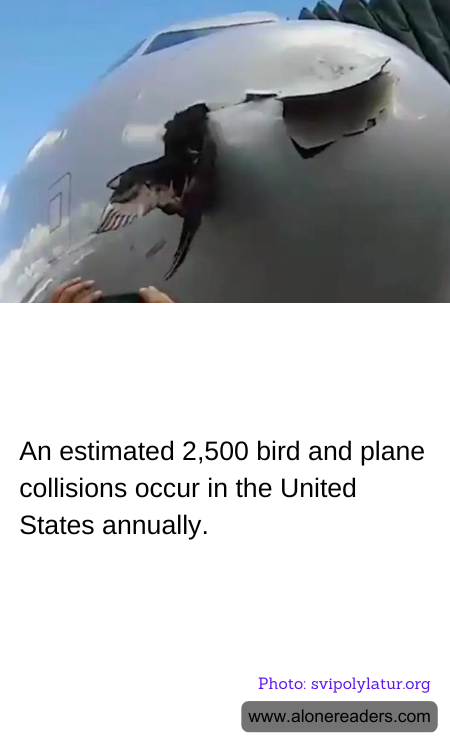
Every year, an estimated 2,500 bird and plane collisions, known as bird strikes, occur in the United States. This phenomenon, while often overlooked, poses significant challenges to aviation safety and wildlife conservation. Bird strikes can result in costly repairs for aircraft, potential risks to human safety, and unfortunate consequences for bird populations.
Bird strikes typically occur during takeoff or landing when aircraft are flying at lower altitudes. These incidents can range from minor to severe, depending on the size of the bird and the speed of the aircraft. While modern aircraft are designed to withstand such impacts, bird strikes can still cause substantial damage to engines, windshields, and other critical components. In rare cases, they have led to emergency landings and, historically, even accidents.
The aviation industry, along with wildlife experts, has been actively working to mitigate the risks associated with bird strikes. Airports employ various strategies to reduce the likelihood of these incidents. These include habitat management, such as removing food sources and nesting areas near runways, and using technology like radar systems to detect and track bird movements. Additionally, some airports use trained birds of prey or noise-making devices to deter birds from entering flight paths.
On the conservation front, efforts are being made to understand bird migration patterns and behaviors better. This knowledge helps in designing more effective bird strike prevention measures. Collaboration between aviation authorities and wildlife organizations is crucial in developing strategies that protect both aircraft and bird populations.
Public awareness also plays a vital role in addressing the issue of bird strikes. Educating communities about the importance of reporting bird sightings near airports can aid in early detection and prevention efforts. Moreover, understanding the ecological impact of bird strikes encourages a more balanced approach to aviation safety and wildlife conservation.
While bird strikes remain a challenge, the ongoing efforts of aviation professionals, wildlife experts, and the public contribute to reducing their frequency and impact. By continuing to innovate and collaborate, we can ensure safer skies for both humans and birds, fostering a harmonious coexistence between aviation and nature.
