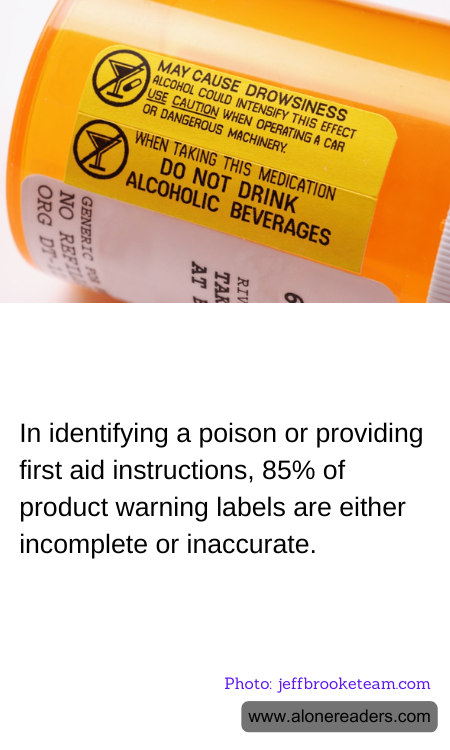
In today's world, where consumer products are an integral part of daily life, the importance of accurate and comprehensive warning labels cannot be overstated. These labels are designed to inform and protect consumers from potential hazards associated with the use of various products. However, recent studies have revealed a concerning trend: a staggering 85% of product warning labels are either incomplete or inaccurate when it comes to identifying poisons or providing first aid instructions.
This alarming statistic raises significant concerns about consumer safety. When individuals rely on product labels for crucial information, especially in emergencies, the consequences of misinformation can be dire. Incomplete or inaccurate labels can lead to improper handling of toxic substances, delayed medical intervention, and, in severe cases, life-threatening situations. For instance, a mislabeled household cleaner might not only fail to warn users of its toxic nature but also provide incorrect first aid instructions, exacerbating the harm in case of accidental ingestion or exposure.
The root of this issue often lies in the lack of stringent regulatory oversight and the complexity of chemical compositions in modern products. Many manufacturers, in their bid to market products quickly, may overlook the critical need for precise and clear labeling. Additionally, the language used in these warnings can be overly technical, making it difficult for the average consumer to understand the risks involved. This gap in communication underscores the necessity for regulatory bodies to enforce stricter guidelines and for companies to prioritize consumer education.
To address this pressing issue, several measures can be implemented. First, regulatory agencies must establish and enforce comprehensive standards for product labeling that mandate clear, concise, and accurate information. This includes standardized symbols and language that can be easily understood by consumers of all ages and educational backgrounds. Furthermore, manufacturers should be encouraged to conduct thorough testing and validation of their labels to ensure they meet these standards before products hit the shelves.
Public awareness campaigns can also play a pivotal role in educating consumers about the importance of reading and understanding product labels. By fostering a culture of safety and awareness, individuals can become more vigilant and proactive in protecting themselves and their families from potential hazards.
In conclusion, the revelation that 85% of product warning labels are either incomplete or inaccurate is a wake-up call for both manufacturers and regulatory bodies. Ensuring the safety of consumers should be a paramount concern, and it begins with providing them with the right information. By improving the accuracy and clarity of product labels, we can significantly reduce the risks associated with toxic substances and enhance overall public safety.
