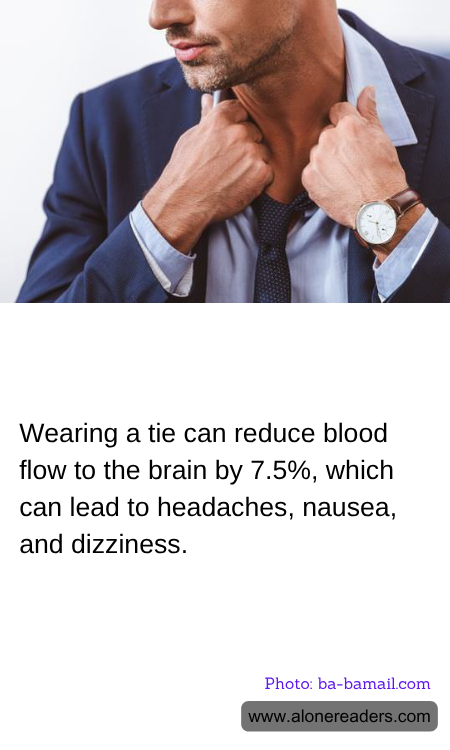
The humble necktie, a staple of formal attire for centuries, has recently come under scrutiny for its potential health implications. While it may seem like a harmless fashion accessory, research suggests that wearing a tie can reduce blood flow to the brain by up to 7.5%. This reduction in circulation can lead to a range of uncomfortable symptoms, including headaches, nausea, and dizziness.
The primary concern with wearing a tie is its constrictive nature. When tied too tightly, it can compress the veins in the neck, restricting blood flow to the brain. This can be particularly problematic for individuals who are already predisposed to circulatory issues or those who wear ties for extended periods. The pressure exerted by a tight collar and tie can also increase intraocular pressure, potentially exacerbating conditions like glaucoma.
The implications of reduced blood flow to the brain are not to be taken lightly. The brain requires a constant supply of oxygen-rich blood to function optimally. Even a slight decrease in this supply can lead to cognitive impairments and physical discomfort. Symptoms such as headaches and dizziness are the body's way of signaling that something is amiss. In severe cases, prolonged restriction of blood flow could contribute to more serious health issues.
For those who must wear ties regularly, there are several strategies to mitigate these risks. Choosing a tie that is not too tight and ensuring that the collar fits comfortably can make a significant difference. It is also advisable to take breaks throughout the day to loosen the tie and allow for better circulation. Additionally, opting for shirts with a slightly larger collar size can help reduce the pressure on the neck.
While the tie remains a symbol of professionalism and style, it is essential to balance fashion with health. Awareness of the potential risks associated with wearing a tie can empower individuals to make informed choices about their attire. By taking simple precautions, it is possible to enjoy the aesthetic benefits of a tie without compromising one's well-being.
In conclusion, while the tie may seem like a minor aspect of one's wardrobe, its impact on health should not be underestimated. As more people become aware of the potential risks, it is hoped that fashion will continue to evolve in a way that prioritizes comfort and health alongside style. Whether for work or special occasions, wearing a tie should not come at the cost of one's health. By making small adjustments, individuals can ensure that they look good and feel good too.
