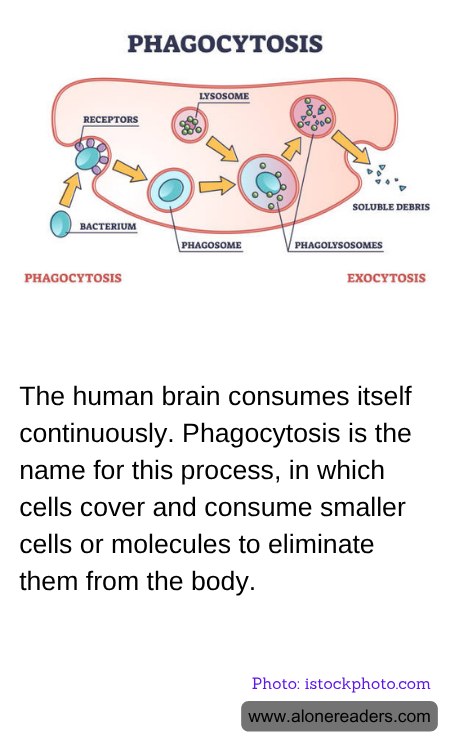
The human brain is an extraordinary organ, constantly at work to maintain its complex functions. Among its many tasks, one of the most intriguing is its ability to consume itself through a process known as phagocytosis. This process involves cells engulfing and digesting smaller cells or molecules, effectively eliminating them from the body. While it might sound alarming, this self-consumption is a vital part of maintaining brain health and function.
Phagocytosis is primarily carried out by specialized cells called microglia, which are the brain's resident immune cells. These cells play a crucial role in the brain's maintenance by removing debris, dead cells, and other potentially harmful substances. By doing so, microglia help to prevent inflammation and maintain a healthy environment for neurons, the brain's primary signaling cells. This process is essential for brain development, synaptic pruning, and the overall homeostasis of the central nervous system.
During brain development, phagocytosis is particularly important. As the brain grows, it produces an excess of neurons and synapses, the connections between neurons. Microglia help to refine these connections by engulfing and removing unnecessary or weak synapses, a process known as synaptic pruning. This refinement is crucial for the development of efficient neural networks, which are essential for learning, memory, and cognitive function.
In adulthood, phagocytosis continues to play a vital role in maintaining brain health. It helps to clear out damaged cells and proteins that could otherwise accumulate and lead to neurodegenerative diseases such as Alzheimer's and Parkinson's. By continuously monitoring and cleaning up the brain's environment, microglia help to prevent the buildup of toxic substances that can impair brain function.
Interestingly, research has shown that phagocytosis is not only a defensive mechanism but also a way for the brain to adapt and respond to changes. For example, during periods of stress or injury, microglia can become more active, increasing their phagocytic activity to protect and repair the brain. This adaptability highlights the dynamic nature of the brain's immune system and its ability to respond to various challenges.
While the idea of the brain consuming itself might seem unsettling, phagocytosis is a testament to the brain's remarkable ability to maintain its health and function. By continuously monitoring and cleaning its environment, the brain ensures that it can operate at its best, supporting everything from basic survival functions to complex cognitive processes. Understanding this process not only sheds light on the brain's inner workings but also opens up potential avenues for treating neurological disorders and enhancing brain health throughout life.
