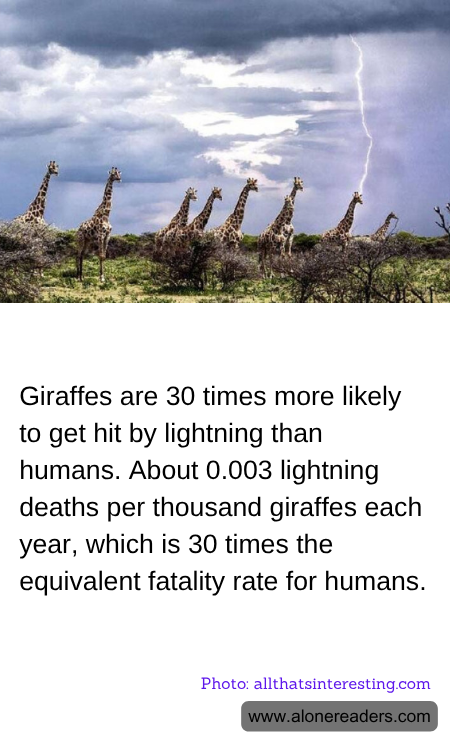
In the vast savannas of Africa, where the horizon stretches endlessly and the skies often crackle with electric energy, giraffes roam majestically. These towering creatures, with their long necks and striking patterns, are a symbol of the wild. However, their impressive height, which allows them to reach the highest branches for food, also makes them particularly vulnerable to one of nature's most unpredictable phenomena: lightning.
Giraffes are approximately 30 times more likely to be struck by lightning than humans. This startling statistic is rooted in simple physics. Standing as the tallest land animals, giraffes can reach heights of up to 18 feet, making them natural lightning rods during thunderstorms. In open landscapes where trees are sparse, a giraffe's height can make it the tallest point in the vicinity, increasing the likelihood of a lightning strike.
The fatality rate from lightning strikes among giraffes is about 0.003 deaths per thousand giraffes each year. While this number might seem small, it is significantly higher than the equivalent rate for humans. For comparison, the human fatality rate from lightning strikes is much lower, thanks to our ability to seek shelter and the presence of structures that can absorb or deflect lightning.
The impact of a lightning strike on a giraffe can be devastating. The electrical discharge can cause immediate death or severe injuries, affecting the nervous system and internal organs. In some cases, the aftermath of a lightning strike might not be immediately fatal but can lead to complications that affect the giraffe's ability to survive in the wild.
Efforts to mitigate the risk of lightning strikes on giraffes are limited, given the vast and open nature of their habitats. Conservationists and wildlife researchers continue to study these incidents to better understand the patterns and potential protective measures. Some wildlife reserves have considered installing lightning rods in areas where giraffes frequently gather, but such interventions are challenging to implement on a large scale.
The plight of giraffes in the face of lightning serves as a reminder of the delicate balance of nature and the unique challenges faced by wildlife. As we continue to learn more about these gentle giants and their environment, it is crucial to raise awareness about the factors that threaten their survival. By understanding and addressing these challenges, we can contribute to the conservation of giraffes and ensure that future generations can marvel at their grace and beauty in the wild.
