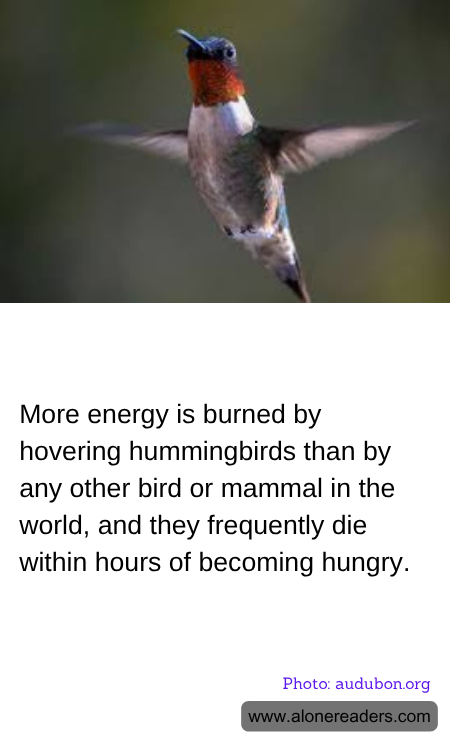
Hummingbirds are among nature's most fascinating creatures, renowned for their vibrant plumage and remarkable flying abilities. However, what truly sets them apart is their extraordinary energy expenditure. These tiny birds burn more energy relative to their size than any other bird or mammal on the planet. This high-energy lifestyle is primarily due to their unique ability to hover, a feat that requires rapid wing beats and immense metabolic output.
Hovering is an energy-intensive activity. To maintain their position in the air, hummingbirds flap their wings at an astonishing rate of up to 80 times per second. This rapid movement demands a continuous supply of energy, which is why hummingbirds consume more than their body weight in nectar each day. Their metabolism is so fast that they must feed almost constantly, visiting hundreds of flowers daily to meet their energy needs. The sugar-rich nectar they consume is quickly converted into energy, fueling their high-speed wing beats and agile maneuvers.
The hummingbird's need for constant nourishment is not just a matter of preference but a necessity for survival. If a hummingbird goes without food for even a few hours, it risks starvation. Their tiny bodies have little capacity for fat storage, meaning they cannot rely on reserves to sustain them during periods of food scarcity. This precarious balance between energy intake and expenditure makes them vulnerable to changes in their environment, such as a sudden drop in temperature or a lack of available flowers.
Despite these challenges, hummingbirds have evolved several adaptations to cope with their demanding lifestyle. At night or during periods of food scarcity, they can enter a state of torpor, significantly reducing their metabolic rate to conserve energy. This temporary hibernation allows them to survive without food for short periods, although it is not a long-term solution.
The hummingbird's incredible energy demands and their reliance on nectar-rich flowers highlight the delicate balance of ecosystems. These birds play a crucial role in pollination, helping to sustain the very plants they depend on for survival. Their existence is a testament to the intricate interdependence of life forms within an ecosystem.
In conclusion, the hummingbird's life is a constant race against time and energy. Their ability to hover and their vibrant presence in gardens and forests around the world are a marvel of nature's engineering. However, their survival hinges on their ability to find food continuously, making them one of the most energy-demanding creatures on Earth. Understanding and appreciating these tiny aviators can inspire efforts to preserve their habitats and ensure that they continue to enchant us with their aerial acrobatics for generations to come.
