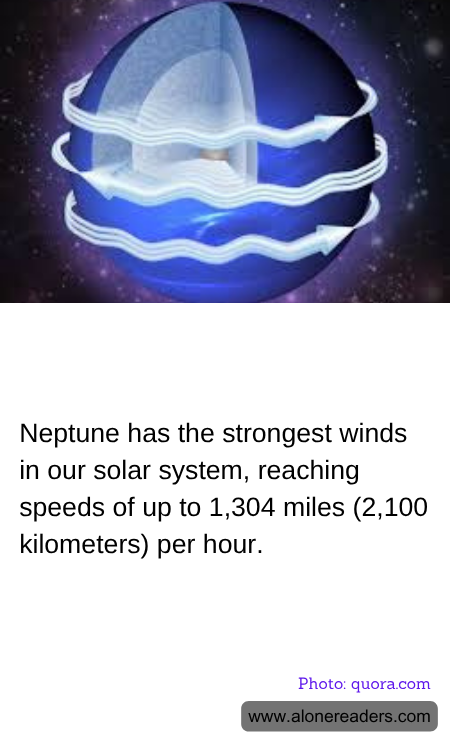
Neptune, the eighth and farthest planet from the Sun in our solar system, is a world of extremes. Known for its striking blue color, which is a result of methane in its atmosphere, Neptune is a dynamic planet with a host of fascinating features. Among these, its winds stand out as the most powerful in our solar system, reaching astonishing speeds of up to 1,304 miles (2,100 kilometers) per hour. This makes Neptune a subject of great interest for scientists and space enthusiasts alike.
The winds on Neptune are not only the fastest but also among the most mysterious. Despite being so far from the Sun, where solar energy is weak, Neptune's atmosphere is incredibly active. The planet's winds are much faster than those on Earth, where the strongest hurricanes reach speeds of only about 200 miles (320 kilometers) per hour. The reasons behind these supersonic winds are still not fully understood, but scientists believe that Neptune's internal heat plays a significant role. Unlike Earth, Neptune emits more energy than it receives from the Sun, which might drive the intense atmospheric activity.
Neptune's winds are part of a complex weather system that includes massive storms and dark spots similar to Jupiter's Great Red Spot. These storms can be as large as Earth itself and are constantly changing, appearing and disappearing over time. The planet's atmosphere is composed mainly of hydrogen, helium, and methane, with the latter giving Neptune its distinctive blue hue. This composition, combined with the planet's rapid rotation, contributes to the formation of its fierce winds and dynamic weather patterns.
The study of Neptune's winds provides valuable insights into atmospheric dynamics not only on Neptune but also on other planets, including Earth. Understanding how such extreme winds can exist in the absence of strong solar energy challenges our current models of atmospheric science and encourages the development of new theories. Additionally, studying Neptune helps scientists learn more about the formation and evolution of our solar system, as well as the potential for similar conditions on exoplanets orbiting distant stars.
Neptune's winds are a testament to the planet's wild and untamed nature. They remind us of the vast and varied conditions that exist within our solar system, offering a glimpse into the powerful forces at play on distant worlds. As technology advances and space exploration continues, we may one day unlock the secrets of Neptune's winds, further enriching our understanding of the universe and our place within it. Until then, Neptune remains a captivating mystery, inviting us to explore and discover the wonders of the cosmos.
