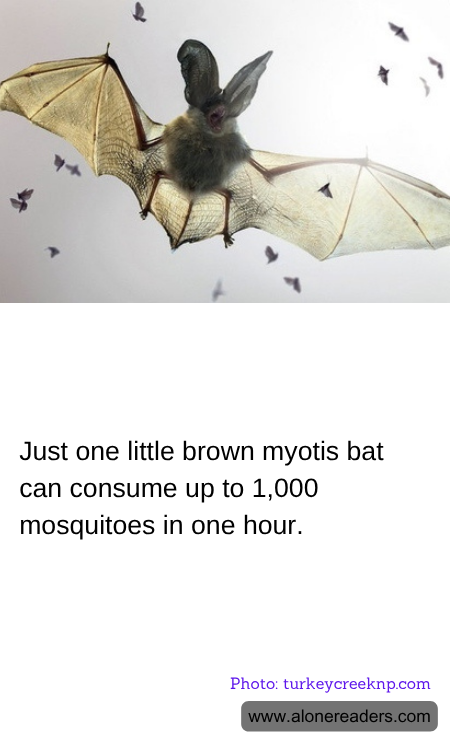
In the intricate tapestry of the natural world, bats often play an unsung yet crucial role. Among these fascinating creatures, the little brown myotis bat stands out as a remarkable insectivore, capable of consuming up to 1,000 mosquitoes in a single hour. This extraordinary feat not only highlights the bat's impressive hunting skills but also underscores its vital contribution to maintaining ecological balance.
The little brown myotis bat, scientifically known as Myotis lucifugus, is a small, agile mammal commonly found across North America. Despite its diminutive size, this bat is a powerhouse when it comes to pest control. As dusk falls, these bats emerge from their roosts, embarking on nightly foraging missions. Their primary target? Mosquitoes and other flying insects. With an insatiable appetite, a single little brown myotis can devour a staggering number of mosquitoes, providing a natural solution to pest management.
This voracious consumption of mosquitoes is not only beneficial for humans but also for the environment. Mosquitoes are known vectors for diseases such as West Nile virus, Zika virus, and malaria. By significantly reducing mosquito populations, little brown myotis bats help mitigate the spread of these diseases, contributing to public health and safety. Moreover, their role in controlling insect populations aids in protecting crops and reducing the need for chemical pesticides, promoting a healthier ecosystem.
The little brown myotis bat's ability to consume such a large number of mosquitoes is facilitated by its unique adaptations. Equipped with echolocation, these bats emit high-frequency sounds that bounce off objects, allowing them to navigate and hunt with precision in complete darkness. Their agile flight and acute hearing enable them to detect and capture even the smallest of prey mid-air. This natural prowess makes them one of the most efficient insect predators in the animal kingdom.
Despite their ecological importance, little brown myotis bats face numerous threats. Habitat loss, climate change, and the devastating effects of white-nose syndrome—a fungal disease that has decimated bat populations—pose significant challenges to their survival. Conservation efforts are crucial to protect these bats and ensure they continue to thrive in their natural habitats. By preserving their roosting sites and supporting initiatives aimed at combating white-nose syndrome, we can help safeguard these invaluable creatures.
In conclusion, the little brown myotis bat is a testament to nature's ingenuity. Its ability to consume up to 1,000 mosquitoes in an hour not only showcases its remarkable hunting skills but also highlights its indispensable role in maintaining ecological balance. As we continue to learn more about these fascinating mammals, it becomes increasingly clear that their conservation is vital for both environmental health and human well-being. By appreciating and protecting the little brown myotis bat, we take a step towards a more harmonious coexistence with the natural world.
