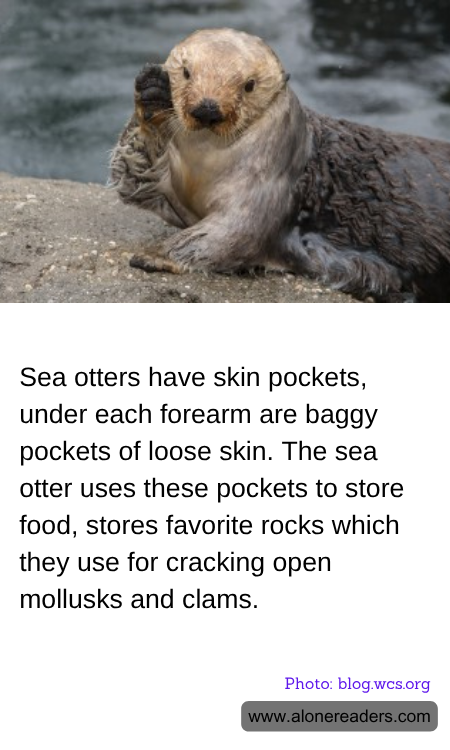
Sea otters, the playful and endearing marine mammals, are not only fascinating for their adorable appearance and social behaviors but also for their unique anatomical features. One of the most intriguing aspects of sea otters is their skin pockets, located under each forearm. These baggy pockets of loose skin serve as nature's version of a backpack, allowing sea otters to carry and store essential items as they navigate their aquatic environment.
These skin pockets are a vital adaptation for sea otters, who spend a significant amount of their lives in the water. Unlike many other marine animals, sea otters do not have blubber to keep them warm. Instead, they rely on their dense fur and these handy pockets to help them survive and thrive in the chilly waters of the Pacific Ocean. The pockets are used primarily for storing food and tools, which are crucial for their survival.
Sea otters are known for their intelligence and resourcefulness, particularly when it comes to feeding. They have a diverse diet that includes sea urchins, crabs, and various mollusks and clams. To access the tasty morsels inside these hard-shelled creatures, sea otters use rocks as tools. They are one of the few non-human animals known to use tools in this way. A sea otter will dive to the ocean floor to find a suitable rock, which it then stores in its skin pocket. When it's time to eat, the otter retrieves the rock and uses it to crack open the shells of its prey, demonstrating remarkable dexterity and problem-solving skills.
The skin pockets also serve as a convenient storage space for food. Sea otters often collect more food than they can eat in one sitting, so they tuck away extra morsels in their pockets for later consumption. This behavior is particularly beneficial when food is scarce or when the otter needs to quickly escape from predators without losing its hard-earned meal.
The presence of these skin pockets highlights the sea otter's adaptability and ingenuity. It is a testament to the incredible ways in which animals evolve to meet the challenges of their environments. For sea otters, these pockets are not just a quirky feature but a critical component of their survival strategy.
As we continue to learn more about sea otters and their behaviors, it becomes increasingly clear how important it is to protect these remarkable creatures and their habitats. By understanding and appreciating the unique adaptations of sea otters, we can better advocate for their conservation and ensure that future generations can enjoy the sight of these charming animals frolicking in the ocean.
