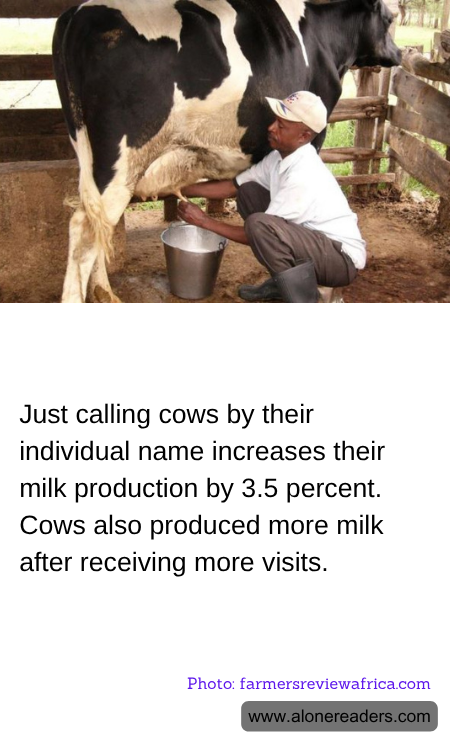
In the world of agriculture, where efficiency and productivity are paramount, a surprising discovery has emerged: simply calling cows by their individual names can lead to a significant increase in milk production. This seemingly small gesture of personal attention can boost milk yield by an impressive 3.5 percent. Moreover, cows that receive more frequent visits from their caretakers also tend to produce more milk. These findings highlight the profound impact of human-animal interaction on livestock productivity.
The relationship between humans and animals has long been a subject of interest, with studies consistently showing that animals respond positively to human attention and care. In the case of dairy cows, this connection is particularly evident. When cows are addressed by their names, it fosters a sense of familiarity and reduces stress, creating a more comfortable environment for them. This comfort translates into better physiological functioning, including increased milk production. The act of naming cows and interacting with them on a personal level can be seen as a form of enrichment, enhancing their overall well-being.
In addition to naming, the frequency of human visits plays a crucial role in milk production. Regular visits from farmers or caretakers help to establish a routine and build trust between the animals and their handlers. This trust is essential for reducing anxiety and promoting a calm atmosphere in the barn. When cows feel secure and content, they are more likely to produce milk efficiently. The presence of a familiar human can also stimulate the release of oxytocin, a hormone associated with milk letdown, further contributing to increased milk yield.
These insights have practical implications for dairy farming practices. By incorporating simple yet effective strategies like naming cows and increasing the frequency of visits, farmers can enhance the productivity of their herds. This approach not only benefits the cows by improving their quality of life but also supports farmers by boosting their economic returns. It underscores the importance of considering animal welfare as an integral part of agricultural practices.
Furthermore, this research encourages a shift in perspective regarding the treatment of livestock. It suggests that animals are not merely production units but sentient beings capable of forming bonds and responding to care. By acknowledging this, farmers can create more humane and sustainable farming systems that prioritize the welfare of animals alongside productivity.
In conclusion, the practice of calling cows by their names and increasing human interaction with them is a testament to the power of empathy and attention in agriculture. It serves as a reminder that small acts of kindness can have significant impacts, not only on the animals themselves but also on the efficiency and success of farming operations. As the agricultural industry continues to evolve, embracing these insights can lead to more harmonious and productive relationships between humans and animals.
