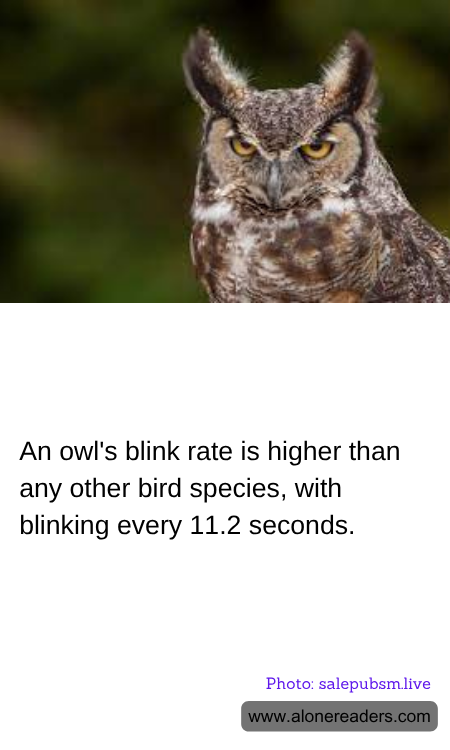
Owls have long fascinated humans with their mysterious presence and nocturnal habits. Among the many intriguing aspects of these birds, their blinking rate stands out as particularly unique. Owls blink more frequently than any other bird species, with an average blink occurring every 11.2 seconds. This frequent blinking is not just a quirky trait but serves several important functions that are vital to their survival and well-being.
The primary reason for an owl's frequent blinking is to maintain the health and functionality of their eyes. Owls are renowned for their exceptional vision, which is crucial for hunting in low-light conditions. Their eyes are specially adapted to gather as much light as possible, allowing them to see clearly in the dark. Frequent blinking helps to keep their eyes moist and free from debris, ensuring that their vision remains sharp and unobstructed. The eyelids of an owl, particularly the nictitating membrane, play a critical role in this process. This translucent third eyelid sweeps across the eye, providing protection and lubrication without significantly obstructing vision.
Another reason for the high blink rate in owls is related to their predatory lifestyle. As stealthy hunters, owls rely heavily on their eyesight to detect and capture prey. Blinking frequently helps to refresh their eyes, reducing the risk of eye strain and fatigue during long periods of hunting. This is especially important during nighttime when their prey is most active, and their visual acuity is put to the test. By maintaining optimal eye health, owls can continue to hunt effectively and sustain themselves in their natural habitats.
Moreover, the frequent blinking of owls may also serve as a form of communication. While owls are not as expressive as some other bird species, subtle changes in their blinking patterns could convey information to other owls. This might include signaling alertness, readiness to mate, or even establishing dominance within a territory. Although more research is needed to fully understand this aspect of owl behavior, it is clear that blinking plays a multifaceted role in their lives.
In conclusion, the frequent blinking of owls is a fascinating adaptation that highlights the complexity of these remarkable birds. By blinking every 11.2 seconds, owls maintain their exceptional vision, support their predatory lifestyle, and possibly communicate with one another. This behavior underscores the intricate balance of nature and the specialized adaptations that enable owls to thrive in their environments. For those who admire these enigmatic creatures, understanding the significance of their blink rate adds another layer of appreciation for the wonders of the natural world.
