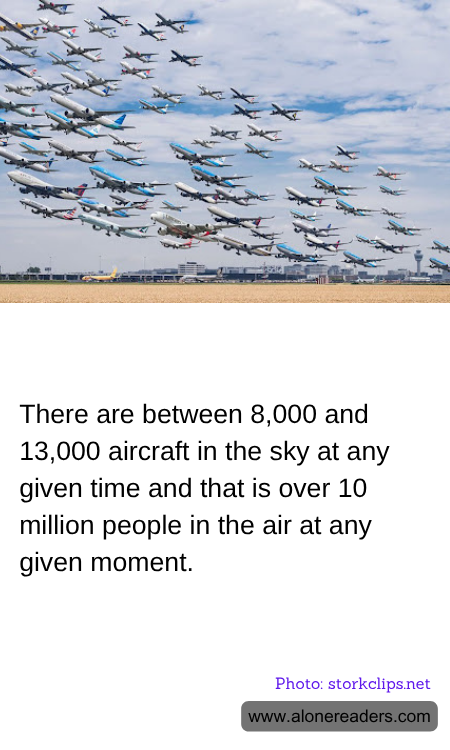
At any given moment, the sky above us is a bustling highway of aircraft, with between 8,000 and 13,000 planes soaring through the air. This astonishing number translates to over 10 million people traveling across the globe at any one time, highlighting the incredible scale and complexity of modern air travel. The skies have become a vital part of our interconnected world, enabling people to traverse continents in mere hours, fostering global business, tourism, and cultural exchange.
The aviation industry has undergone a remarkable transformation since the Wright brothers' first powered flight in 1903. Today, air travel is not just a luxury but a necessity for many, facilitating everything from international commerce to family reunions. The sheer volume of aircraft in the sky at any given time is a testament to the efficiency and reliability of modern aviation technology. Advanced air traffic control systems, sophisticated navigation tools, and rigorous safety protocols ensure that millions of passengers reach their destinations safely every day.
The environmental impact of such a vast number of flights is a growing concern. The aviation industry is responsible for a significant portion of global carbon emissions, prompting airlines and manufacturers to invest in more sustainable technologies. Innovations such as fuel-efficient engines, lightweight materials, and the development of alternative fuels are steps toward reducing the carbon footprint of air travel. Additionally, initiatives like carbon offset programs allow passengers to contribute to environmental conservation efforts, balancing the need for travel with the responsibility to protect our planet.
Despite these challenges, the benefits of air travel are undeniable. It has made the world more accessible, allowing people to explore new cultures, pursue educational opportunities, and conduct business on a global scale. The ability to connect with people from different parts of the world has fostered greater understanding and cooperation among nations. Moreover, the aviation industry is a significant economic driver, providing millions of jobs and supporting countless industries worldwide.
As we look to the future, the aviation industry continues to evolve, embracing new technologies and practices to meet the demands of a growing global population. The prospect of electric and hybrid aircraft, improved air traffic management systems, and even the potential for commercial space travel are on the horizon. These advancements promise to make air travel more efficient, sustainable, and accessible to even more people.
In conclusion, the sight of thousands of aircraft crisscrossing the sky is a powerful symbol of human achievement and connectivity. While challenges remain, the continued innovation and dedication within the aviation industry ensure that the skies will remain a vital part of our world, bringing people together and driving progress for generations to come.
