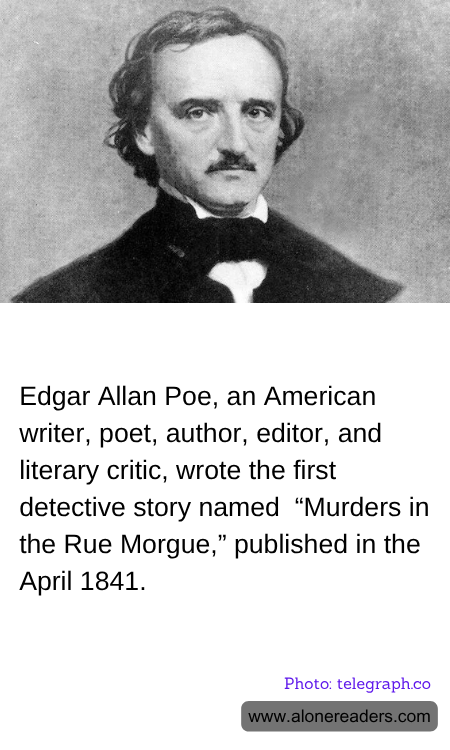
Edgar Allan Poe, a towering figure in American literature, is celebrated for his profound impact on the world of storytelling. Among his many contributions, Poe is credited with creating the first modern detective story, "The Murders in the Rue Morgue," published in April 1841. This groundbreaking work not only showcased his literary genius but also laid the foundation for a new genre that continues to captivate readers around the globe.
"The Murders in the Rue Morgue" introduces readers to C. Auguste Dupin, a brilliant detective whose analytical prowess and keen observational skills set the stage for future fictional sleuths. Set in Paris, the story revolves around the brutal murder of two women in their home on the Rue Morgue. The crime baffles the local police, but Dupin, with his methodical approach and acute attention to detail, unravels the mystery in a manner that was revolutionary for its time.
Poe's creation of Dupin marked a significant departure from the traditional narratives of the era. Unlike the typical protagonists of the time, Dupin was not a law enforcement officer but an amateur detective, driven by his intellectual curiosity and a desire to solve puzzles. This character archetype would later inspire iconic detectives such as Arthur Conan Doyle's Sherlock Holmes and Agatha Christie's Hercule Poirot, cementing Poe's legacy as the father of the detective genre.
The story's structure also contributed to its lasting influence. Poe employed a narrative style that combined elements of horror, mystery, and rational deduction, engaging readers with a blend of suspense and intellectual challenge. The use of a first-person narrator, who is a close friend of Dupin, allows readers to follow the detective's thought process and witness the unraveling of the mystery firsthand. This immersive storytelling technique has become a staple in detective fiction, drawing readers into the heart of the investigation.
Beyond its narrative innovations, "The Murders in the Rue Morgue" reflects Poe's fascination with the human mind and the complexities of perception and logic. His exploration of these themes not only enriches the story but also invites readers to ponder the nature of truth and the limits of human understanding. Poe's ability to weave these philosophical elements into a compelling narrative underscores his mastery as a writer and his enduring influence on literature.
In crafting "The Murders in the Rue Morgue," Edgar Allan Poe not only entertained readers but also transformed the literary landscape. His pioneering work in the detective genre has inspired countless authors and continues to captivate audiences of all ages. As we delve into the pages of this seminal story, we are reminded of Poe's unparalleled ability to blend mystery, intellect, and imagination, leaving an indelible mark on the world of fiction.
