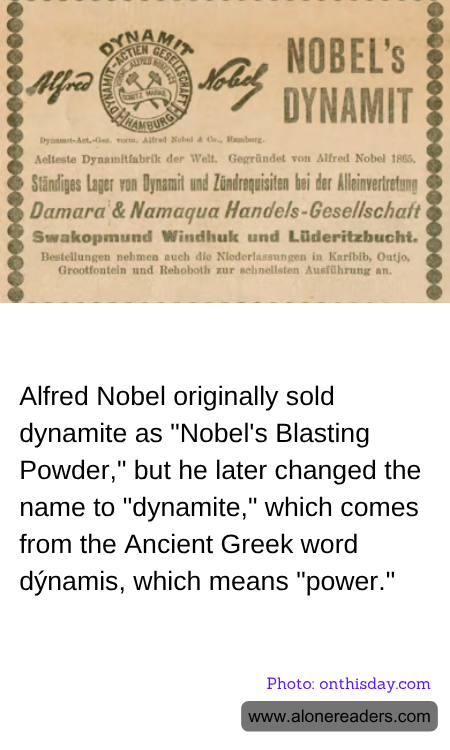
Alfred Nobel, a name synonymous with the prestigious Nobel Prizes, was also a pioneering inventor whose creations have had a profound impact on the world. Among his most notable inventions was dynamite, a powerful explosive that revolutionized industries such as construction and mining. However, the journey of dynamite from its inception to its eventual name is a fascinating tale of innovation and linguistic inspiration.
Originally, Nobel marketed his invention as "Nobel's Blasting Powder." This early version of dynamite was a safer alternative to the highly unstable nitroglycerin, which had been responsible for numerous accidents and fatalities. Nobel's innovation involved the absorption of nitroglycerin into an inert substance, making it much safer to handle and transport. This breakthrough not only reduced the risks associated with explosives but also increased their utility in various industrial applications.
Despite the initial success of "Nobel's Blasting Powder," Nobel recognized the need for a more distinctive and memorable name that would capture the essence of his invention. He turned to the rich tapestry of the Ancient Greek language for inspiration. The word "dýnamis," meaning "power," resonated with Nobel as it perfectly encapsulated the explosive's potential and strength. Thus, the name "dynamite" was born, a term that would soon become synonymous with explosive power and innovation.
The renaming of his invention was more than just a marketing strategy; it was a reflection of Nobel's understanding of the transformative power of language. By choosing a name rooted in the concept of power, Nobel not only highlighted the explosive's capabilities but also aligned it with the broader narrative of human progress and industrial advancement. Dynamite quickly became an indispensable tool in the construction of railways, roads, and tunnels, facilitating the rapid expansion of infrastructure during the Industrial Revolution.
Alfred Nobel's decision to rename his invention to "dynamite" underscores the importance of language in shaping perceptions and driving innovation. It serves as a reminder of how a single word, carefully chosen, can encapsulate the essence of an idea and propel it into the annals of history. Today, while the Nobel Prizes continue to honor achievements in peace, literature, and science, the legacy of dynamite endures as a testament to Nobel's ingenuity and his lasting impact on the world.
