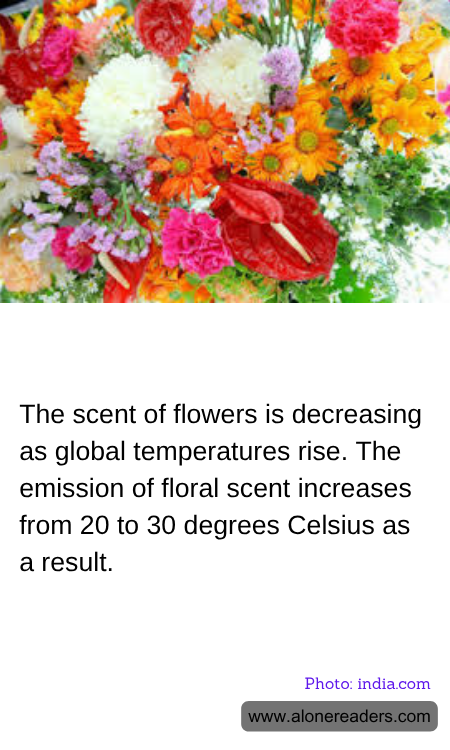
As global temperatures continue to rise, a subtle yet significant change is occurring in the natural world: the scent of flowers is diminishing. This phenomenon, while not immediately noticeable to the casual observer, has profound implications for ecosystems and human experiences alike. The delicate fragrances that flowers emit are not just pleasant to our senses; they play a crucial role in the survival of many plant species by attracting pollinators such as bees, butterflies, and birds.
Research has shown that the emission of floral scents is optimal within a specific temperature range, typically between 20 to 30 degrees Celsius. Within this range, flowers release their aromatic compounds most effectively, ensuring that their scent travels far and wide to attract pollinators. However, as global temperatures rise beyond this optimal range, the ability of flowers to emit their scents diminishes. This is because higher temperatures can cause the volatile compounds responsible for floral scents to evaporate more quickly, reducing the overall intensity and reach of the fragrance.
The implications of this change are far-reaching. Pollinators rely heavily on floral scents to locate flowers, and a decrease in scent emission can lead to reduced pollination rates. This, in turn, affects the reproduction of flowering plants, potentially leading to declines in plant populations. Such a shift could disrupt entire ecosystems, as plants form the foundation of most food webs. Additionally, many crops that humans rely on for food are dependent on pollinators, meaning that a decrease in floral scents could have direct consequences for agricultural productivity and food security.
Beyond the ecological impacts, the diminishing scent of flowers also affects human experiences. The fragrance of flowers has been celebrated in cultures around the world for centuries, often associated with beauty, romance, and tranquility. Gardens, parks, and natural landscapes may lose some of their sensory appeal, altering the way people connect with nature. The loss of floral scents could also impact industries such as perfumery and aromatherapy, which rely on the natural fragrances of flowers for their products.
Addressing this issue requires a multifaceted approach. Efforts to mitigate climate change by reducing greenhouse gas emissions are crucial to slowing the rise in global temperatures. Additionally, conservation strategies that protect and restore natural habitats can help support pollinator populations and maintain biodiversity. Researchers are also exploring ways to enhance the resilience of plants to changing temperatures, potentially through selective breeding or genetic modification.
In conclusion, the decreasing scent of flowers as global temperatures rise is a reminder of the intricate connections between climate, ecosystems, and human experiences. By understanding and addressing these changes, we can work towards preserving the natural world and the many benefits it provides.
