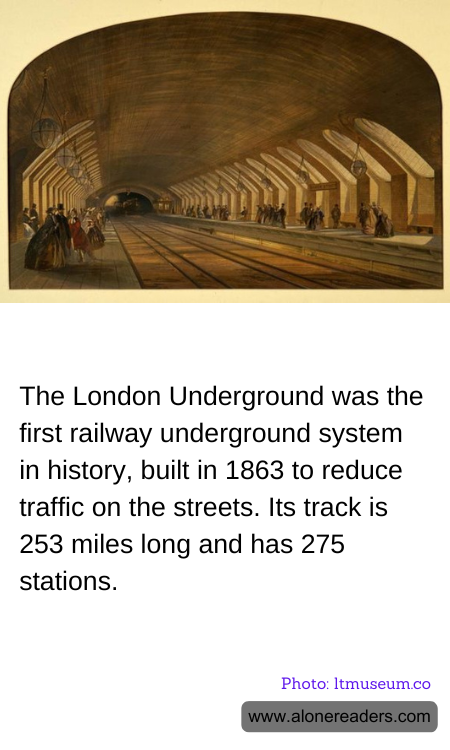
The London Underground, often referred to as "the Tube," holds the distinction of being the world's first underground railway system. Its inception in 1863 marked a revolutionary step in urban transportation, designed to alleviate the burgeoning traffic congestion on London's streets. This pioneering venture not only transformed the way people navigated the city but also set a precedent for modern urban transit systems worldwide.
The initial stretch of the Underground was a modest 3.75 miles, connecting Paddington to Farringdon Street. This section was operated by steam locomotives, a testament to the engineering ingenuity of the Victorian era. Despite the challenges of operating in a subterranean environment, the system quickly gained popularity, demonstrating the public's eagerness for efficient and reliable urban transport. The success of this initial line spurred further expansion, leading to the extensive network we see today.
Currently, the London Underground boasts a sprawling network of 253 miles of track, serving 275 stations across the city and its suburbs. This vast system is a lifeline for millions of commuters, tourists, and residents, facilitating over a billion journeys each year. The Tube's iconic map, with its distinctive color-coded lines, has become a symbol of London itself, representing the city's commitment to connectivity and accessibility.
The development of the Underground was not without its challenges. The construction required innovative solutions to navigate the city's dense infrastructure and minimize disruption to daily life. Engineers employed a "cut and cover" method for the initial lines, digging trenches along streets and covering them after the tracks were laid. As technology advanced, so did the methods of construction, with deep-level tunnels being bored through the earth to accommodate new lines.
Beyond its practical function, the London Underground has become an integral part of the city's cultural fabric. Its stations are architectural landmarks, with some featuring stunning art installations and historical exhibits. The Tube has also inspired countless works of fiction, music, and art, cementing its place in the cultural consciousness.
The London Underground's legacy is one of innovation and resilience. It has continuously adapted to the needs of a growing metropolis, incorporating modern technologies and sustainable practices to ensure its relevance in the 21st century. As cities around the world grapple with the challenges of urbanization, the Tube remains a shining example of how visionary infrastructure can shape the future of urban living.
In summary, the London Underground is more than just a transportation system; it is a testament to human ingenuity and the enduring spirit of progress. Its creation in 1863 was a bold step towards a more connected and efficient urban environment, and its continued evolution reflects the dynamic nature of London itself. As the Tube continues to expand and innovate, it remains a vital part of the city's identity, serving as a reminder of the transformative power of visionary infrastructure.
